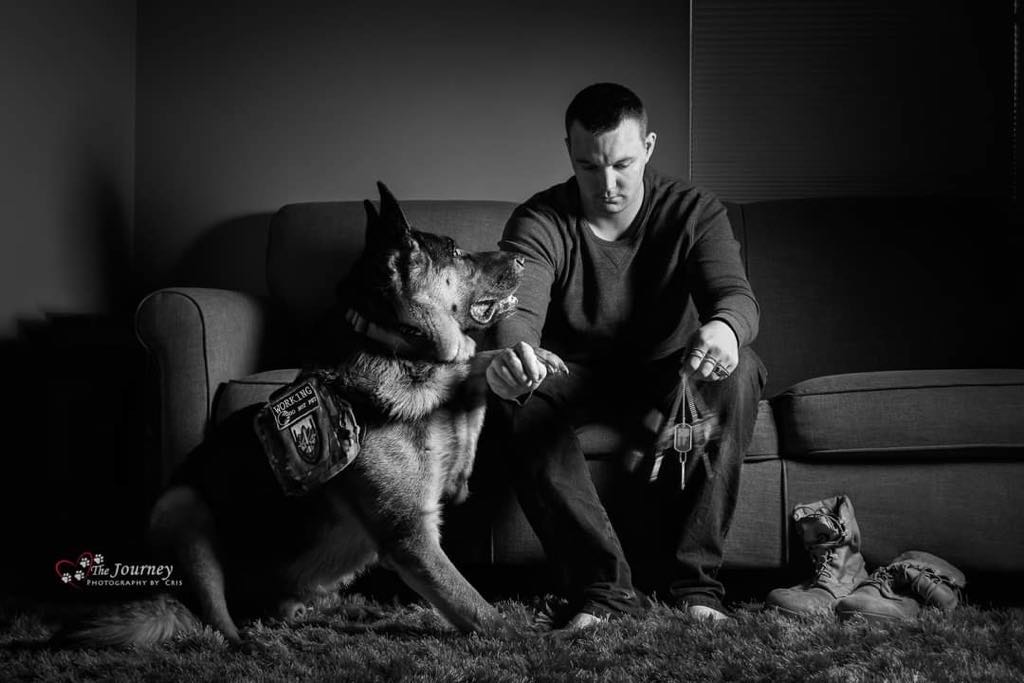
Training a service dog in Alaska is a serious commitment. The dog must reliably perform specific tasks that mitigate a disability, stay focused in real-world environments, and handle the unique demands of life in the North, extreme weather, wildlife, long distances, and limited access to training resources in many communities.
At Alaska Dog Works, we have been training and supporting service dog teams for more than two decades. We have placed dogs across Alaska and beyond, and we have seen what works and what does not in these conditions. This guide shares the practical reality of the process based on that experience.
Service Dog vs Therapy Dog vs Emotional Support Animal
These three categories are often confused, and the differences matter legally and practically.
A service dog is individually trained to perform specific tasks that mitigate a person’s disability. Under the Americans with Disabilities Act (ADA), service dogs have public access rights in most public places.
A therapy dog is trained to provide comfort and emotional support to multiple people in settings such as schools, hospitals, clinics, or counseling offices. Therapy dogs do not have the same public access rights as service dogs.
An emotional support animal (ESA) provides comfort by its presence but is not task-trained. ESAs do not have public access rights under the ADA.
In Alaska, these distinctions affect housing, air travel, ferry travel, and entry into businesses. Mixing up the categories can create unnecessary problems for both the handler and the public.
Is a Service Dog Right for You in Alaska?
A service dog can be life-changing when the match and training are solid. It is not the right solution for every situation. The dog must be capable of consistent task work, and the handler must be willing and able to maintain the training over the long term.
Alaska adds extra layers. Cold weather, limited daylight in winter, wildlife distractions, and travel on ferries or small aircraft all require additional preparation. Teams that succeed here usually train in the actual environments the dog will work in, not only in controlled settings.
Dog Selection Criteria for Northern Conditions
Not every dog is suited for service work, and not every service dog is suited for Alaska.
We primarily work with Labrador Retrievers, Golden Retrievers, Labradoodles, and German Shepherds. These breeds tend to offer the right combination of temperament, size, health, and work ethic for the demands of service work in northern conditions. We do not use toy breeds or dogs with unknown histories for service work.
Key factors we evaluate include stable temperament, strong work drive without excessive reactivity, physical soundness, and the ability to remain calm and focused in distracting environments.
The Training Process: Step-by-Step
Professional service dog training generally follows these stages:
- Temperament and health evaluation
- Foundation obedience and impulse control
- Task training specific to the handler’s disability
- Public access training in real environments
- Handler education and team integration
- Final evaluation and ongoing maintenance
In our experience, most successful service dogs require 18 to 24 months of consistent training before they are reliable in public. Owner-trained teams often take longer because the handler is learning at the same time as the dog.
Public Access Standards
Public access training is where many teams struggle. The dog must remain under control in busy environments, ignore distractions, and perform tasks reliably while the handler is focused on other things.
In Alaska this includes airports, ferry terminals, grocery stores, medical offices, and outdoor settings where wildlife or loose dogs may appear. We train teams in these real environments because controlled facility work alone is not enough.
Owner-Trained vs Professionally Trained Paths
Some handlers choose to train their own dog. This is possible when the dog has suitable temperament and the handler can meet the required standards. It is not the easier path. Owner-trained teams need structure, consistent feedback, and clear benchmarks for public access.
Professionally trained dogs are typically started earlier and worked more intensively before being matched with a handler. Both paths can succeed. Both require significant time and commitment.
Realistic Timeline and Expectations
Service dog training is not a short course. Even under ideal conditions, building a reliable working partner takes many months. In Alaska, weather and distance can slow progress further.
We are honest with clients about this from the beginning. Unrealistic expectations are one of the most common reasons teams struggle or drop out.
Common Challenges Unique to Alaska
Several factors make service dog training different here:
- Extreme cold and limited daylight reduce outdoor training opportunities in winter.
- Wildlife and loose dogs create high-level distractions on trails and in rural areas.
- Ferry and air travel require additional preparation for confined spaces and changing schedules.
- Long distances between communities make regular professional support more difficult for some teams.
Successful Alaska teams adapt their training to these realities rather than ignoring them.
When to Seek Professional Help
If your dog is not progressing, if public access feels unreliable, or if you are unsure whether the dog is a good candidate for service work, it is better to get an honest evaluation early. Continuing with the wrong dog or the wrong approach costs more time and money in the long run.
Frequently Asked Questions
Most professionally trained service dogs need 18 to 24 months. Owner-trained teams often require additional time.
Yes, if the dog has suitable temperament and you can meet training and public access standards. Not every dog is a good candidate.
Yes. Properly trained service dogs are covered under the ADA. Practical preparation for the ferry environment is still necessary.
We primarily work with Labrador Retrievers, Golden Retrievers, Labradoodles, and German Shepherds because of their temperament, size, and working ability.
Yes. Rural teams often face greater wildlife distractions, fewer controlled training environments, and longer travel distances for professional support. Training plans need to account for these differences.
Where to Listen to Dog Works Radio

Dr. Robert Forto
is Alaska Dog Works’ training director.

Michele Forto
is the lead trainer for Alaska Dog Works.
Subscribe to the Dog Works Radio podcast, and check out The Pack newsletter, delivered straight to your inbox.
If you purchase through our links, Alaska Dog Works may earn a commission. Prices were accurate at the time of publication but may change.
We offer a FREE Strategy Call.
Click on the graphic to learn more



Read More