The Real Zombie Virus: Rabies, Cujo, and the Biology Behind the Horror
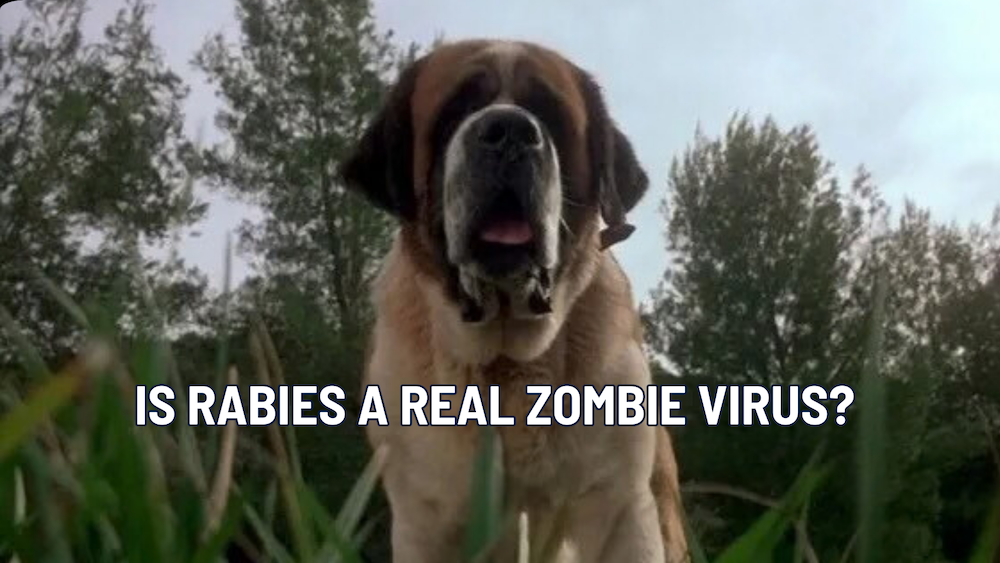
Let’s go back to that image.
A mother and her child pull into a rural mechanic’s yard. A Saint Bernard appears. Within minutes, they are trapped inside their car as the dog snarls and slams against the doors, foam dripping from its mouth.
Most people think of Cujo by Stephen King when they picture that scene.
But what makes that story so powerful isn’t just imagination. It’s biology.
Rabies has been documented in medical records for thousands of years. Long before zombie films and apocalyptic thrillers, rabies was known for producing one of the most chilling combinations in nature: excessive salivation and aggressive biting.
Animals that are rabid foam at the mouth. That foam is not symbolic. It is loaded with viral particles. When you combine heavy drooling with behavioral changes that increase aggression and biting, you create an incredibly efficient transmission system.
In simple terms, the virus benefits when the host behaves in ways that spread it.
That’s behavioral manipulation.
And if that sounds like zombification, that’s because the comparison isn’t far off. In 28 Days Later, the Rage Virus spreads through bodily fluids and transforms its hosts into hyper-aggressive carriers. The fictional virus mirrors rabies more closely than many people realize.
Rabies affects vertebrates. It affects mammals. It changes neurological function in ways that alter behavior for the benefit of the virus.
That’s not myth.
That’s evolutionary strategy.
And rabies isn’t the only example. Toxoplasmosis infects rodents and reduces their instinctive fear of cats. Some infected rodents even become attracted to feline scent. The parasite needs the rodent eaten by a cat to complete its life cycle, so it shifts behavior accordingly.
If you think about Tom and Jerry differently after learning that, you’re not alone.
So what does this mean for dog owners?
It means behavior is not always about training. It is not always about dominance or obedience. Sometimes behavior changes are biological. Sudden aggression paired with neurological symptoms or excessive salivation is not a correction issue. It is a medical emergency.
Rabies is rare in vaccinated dogs, but vaccination is precisely why it is rare.
The larger lesson is humility. Behavior sits on top of biology. When biology shifts, behavior can shift dramatically.
Cujo works as horror because it reflects something ancient and real. Rabies has frightened communities for thousands of years for a reason. The foaming mouth. The unpredictable aggression. The bite.
The truth is unsettling.
But it’s also fascinating.
And as responsible dog owners, understanding the difference between a training problem and a biological one is part of leadership.
Sometimes the zombie story isn’t fiction.
Sometimes it’s science.