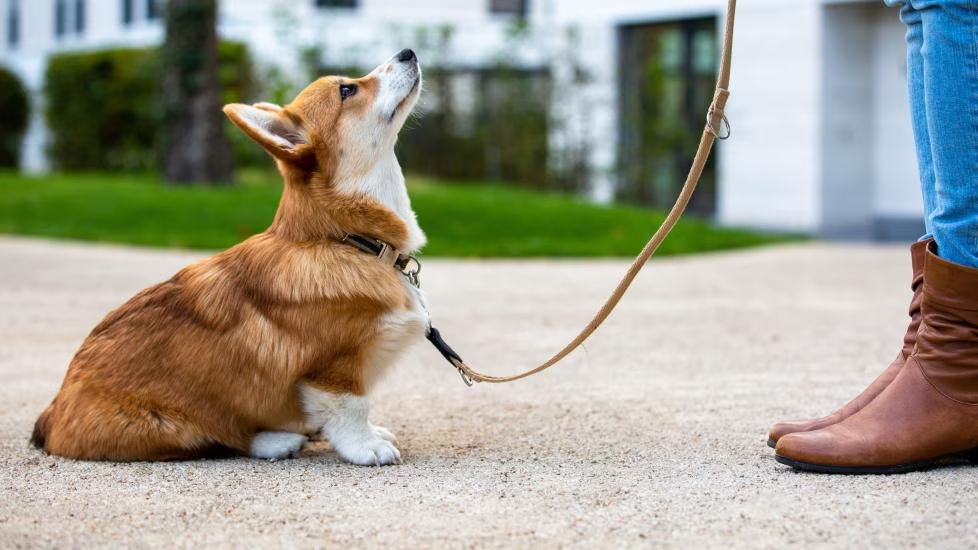
A lot of people think of the leash as a strap that keeps the dog physically close.
They hold it tight.
They wrap it around their hand.
They let the dog drag them forward.
They pull back, the dog pulls harder, and everybody gets frustrated.
Here’s the truth:
The leash is not a rope. It’s a language.
At Alaska Dog Works, after 30+ years and thousands of dogs, we can tell you with certainty that most leash problems aren’t about strength, they’re about communication.
A dog that pulls isn’t strong-willed.
A dog that lunges isn’t dominant.
A dog that zigzags isn’t “just excited.”
They’re confused about the conversation happening at the other end of the line.
Tension Creates Tension
Dogs respond instantly to pressure, physical and emotional.
If you’re clenching the leash, they feel restriction.
Restriction creates frustration.
Frustration creates pulling.
It’s a cycle that you accidentally start every time you tighten up.
The more tension you hold, the more tension your dog carries.
A calm handler creates a calm dog.
A frantic handler creates a frantic dog.
The Leash Should Guide, Not Restrain
A proper leash walk isn’t about dragging a dog or being dragged.
It’s about communication through small, subtle cues.
We teach dogs to:
follow the handler’s movement
match the handler’s pace
respond to light directional guidance
stay mentally connected, not physically forced
If the leash is the only thing holding your dog together, the training isn’t there yet.
Your Dog Should Follow Your Body, Not the Leash
Dogs read body language far better than verbal commands.
Your posture, pace, stance, and direction all mean something to them.
But if the leash is tight, they can’t focus on your movement.
They’re fighting the tension instead of learning the pattern.
When we loosen the leash, something important happens:
the dog finally starts paying attention to you, not the equipment.
Pulling Isn’t a Leash Problem, It’s a Leadership Problem
When a dog is out front, scanning, deciding, and reacting, they’re not being “adventurous.”
They’re trying to lead.
And most of them don’t want the job.
A dog that pulls is a dog who thinks they’re in charge.
A dog that walks calmly is a dog who trusts you to lead.
The leash is simply the tool that helps you show them how.
A Good Leash Walk Solves More Problems Than You Think
A structured walk reduces:
reactivity
anxiety
aggression
pacing
whining
overwhelm
destructive behavior
Because the walk isn’t just exercise, it’s mental organization.
When your dog learns to follow, they learn to calm down everywhere.
Ready to Turn the Leash Into a Language Your Dog Understands?
If every walk feels like a battle, it’s not because your dog is “bad.”
It’s because the communication is missing.
We can fix that, fast.
Schedule your strategy call today and learn how to turn the leash from a lifeline into a true training tool.