Argus: The World’s First Famous Dog and What His Story Still Teaches Us Today
A Story That Has Endured for Nearly 3000 years.
Very few dogs have made their mark on history like Argus (often Argos). Before Lassie, Hachikō, Old Yeller, or Marley & Me, there was Argus. His story is found in The Odyssey, the epic poem by Homer written almost 3,000 years ago, making him possibly the first famous dog in literature. Argus only appears in a few lines, but his short scene has lasted for centuries because it shows something every dog owner knows: a dog’s loyalty never fades for the person they love.
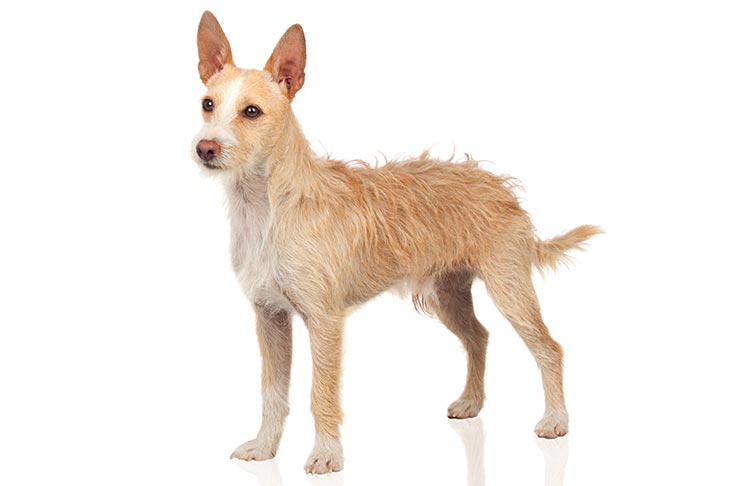
Christopher Nolan’s new film adaptation of The Odyssey is bringing Argus’s story to a new audience. In the movie, Argus is played by a Portuguese Podengo, an ancient hunting breed with roots going back thousands of years. Actor John Leguizamo has said there are only about 75 of these dogs in the world, which makes the casting even more special for such an old story. No matter the exact number or type, the Portuguese Podengo is still one of the oldest and rarest working breeds, making it a fitting choice to play one of history’s most legendary dogs.
Actor John Leguizamo (who plays Eumaeus) shared in interviews that the canine actor was incredibly sweet, jokingly noting that while the ancient breed is remarkably rare, the dog itself “wasn’t the brightest” but was deeply loved by the cast.
Who Was Argus?
In The Odyssey, Odysseus leaves his home on Ithaca to fight in the Trojan War. What should have been a short campaign turns into twenty years away, ten years at war and another ten trying to get home through storms, shipwrecks, monsters, and angry gods. In that time, his kingdom changes a lot. His palace is filled with men who want to marry his wife, Penelope, thinking Odysseus is dead. His son grows up without him, and almost everyone believes the king will never come back.
When Odysseus finally returns to Ithaca, he does not walk in proudly. Instead, Athena disguises him as an old beggar so he can see what has changed before showing who he really is. As he gets close to his palace, almost no one recognizes him. Servants ignore him, strangers turn him away, and even his closest friends are fooled by his disguise.
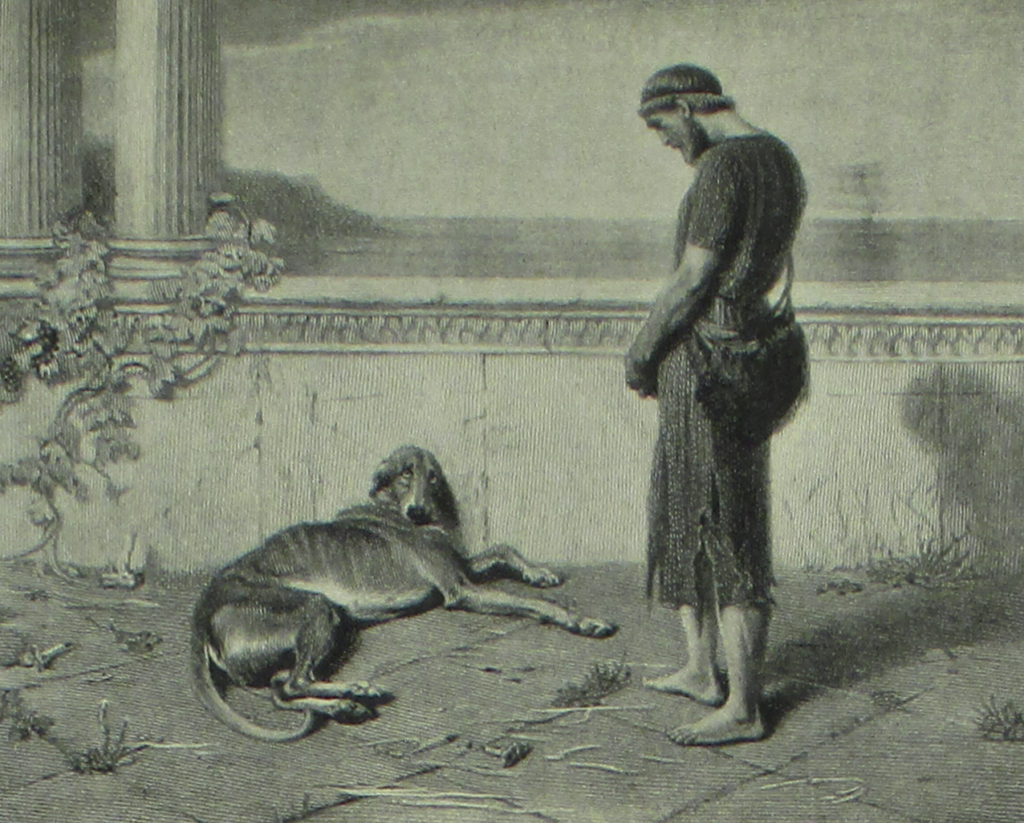
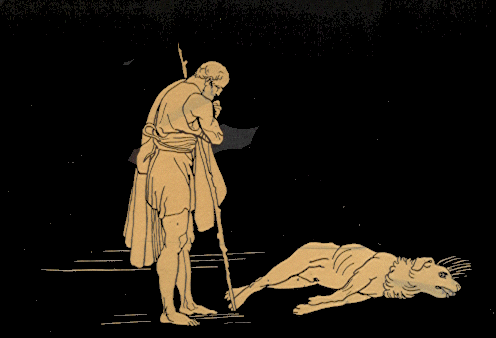
Only one soul knows exactly who he is. Outside the palace lies Argus, the hunting dog Odysseus raised before he left for war. Argus was once known for his speed, endurance, and great hunting skills, but now he is old, weak, and has been neglected while his master was gone. Homer describes him lying on a pile of manure, forgotten by the servants who no longer care about an old dog.
Even after twenty years, and even with Odysseus in disguise, Argus knows his owner right away. He is too weak to stand, so he just lifts his head, lays his ears back, and softly wags his tail. Odysseus cannot show who he is yet, so he quietly wipes away a tear and walks on. Soon after seeing his master one last time, Argus dies peacefully.
Why Argus Still Matters Today
The scene lasts only a few lines, yet it has become one of the most moving moments in all of classical literature. This scene is short, but it is one of the most touching moments in classical literature. It shows us that dogs do not judge relationships by time or achievements. They remember trust, routine, kindness, and friendship. These things leave a mark that lasts a lifetime. He waited through years of uncertainty and hardship, and when the moment finally arrived, he recognized his owner. It is a strong reminder that the relationship we build with our dogs is based on far more than commands or routines. It is built on trust, consistency, and the routine moments that shape a lifetime together.
The Portuguese Podengo: An Ancient Breed for an Ancient Story
Choosing a Portuguese Podengo to play Argus makes sense because the breed is a living link to ancient times. Historians think the ancestors of the Portuguese Podengo traveled around the Mediterranean with Phoenician traders over two thousand years ago before settling in Portugal.
Unlike many modern breeds created for looks or competitions, the Podengo has always been a practical working dog. For generations, hunters have depended on these agile, smart dogs to find and chase rabbits across rocky hills and thick brush, where quick thinking and athletic ability matter more than looks.
These traits are still seen in the breed today. Portuguese Podengos are alert, energetic, very smart, and deeply loyal to their families. They have sharp eyesight and great hearing, so they notice everything around them. They also think for themselves. Instead of waiting for instructions, they were bred to solve problems and make decisions while hunting.
Owners who appreciate this independence often find the breed very entertaining, while those who expect total obedience may mistake their intelligence for stubbornness. In truth, Podengos do best when training is fun, consistent, and rewarding.
What Argus Can Teach Every Dog Owner
Many people think that loyalty and good behavior in dogs just happen naturally. Stories like Argus show us that the strongest bonds are built over time. The connection between a person and their dog grows through shared experiences, calm guidance, steady communication, and trust. Dogs are not loyal because of one training session or their breed. They become loyal because, day after day, they learn their people are reliable, fair, and worth following.
Training is more than teaching a dog to sit, stay, or come. It is about creating a shared language between you and your dog. Each good training session builds confidence, improves communication, and strengthens the partnership that helps dogs succeed today. Whether you have a rare Portuguese Podengo or a mixed-breed rescue, the same principles apply.
Building a Lasting Bond with Alaska Dog Works
This approach guides everything we do at Alaska Dog Works. Whether we are helping an energetic puppy, a rescue dog learning to trust, or an experienced dog with behavior issues, our goal is not just to teach commands. We help families build lasting bonds through clear communication, positive reinforcement, and training that respects how dogs learn. Every dog is unique, and every family has different goals, but the foundation is always the same: trust comes first, skills come second.
Argus did not know Odysseus because of a command learned twenty years before. He knew him because their bond was built on a foundation that even decades apart could not break. Most of us will never go on a twenty-year journey like in ancient times, but we can all build that kind of connection with our dogs through thoughtful training and daily time together.
If you want to build a stronger relationship with your dog through puppy training, basic obedience, behavior help, or advanced lessons, Alaska Dog Works can help. Our mission is to give owners the knowledge and skills to build lifelong trust with their dogs. The real success in dog training is not about ribbons or titles, but about the bond you share every day.
The Legacy That Lives On
Almost three thousand years after Homer first told Argus’s story, it still matters because it touches on something timeless. Technology has changed, civilizations have come and gone, and many new dog breeds have appeared since those ancient days. But the bond between people and dogs is still the same. Argus shows us that while dogs may be just a part of our lives, to them, we are their whole world. That is a responsibility we should honor, and it is why helping people build better relationships with their dogs is still Alaska Dog Works’ mission every day.