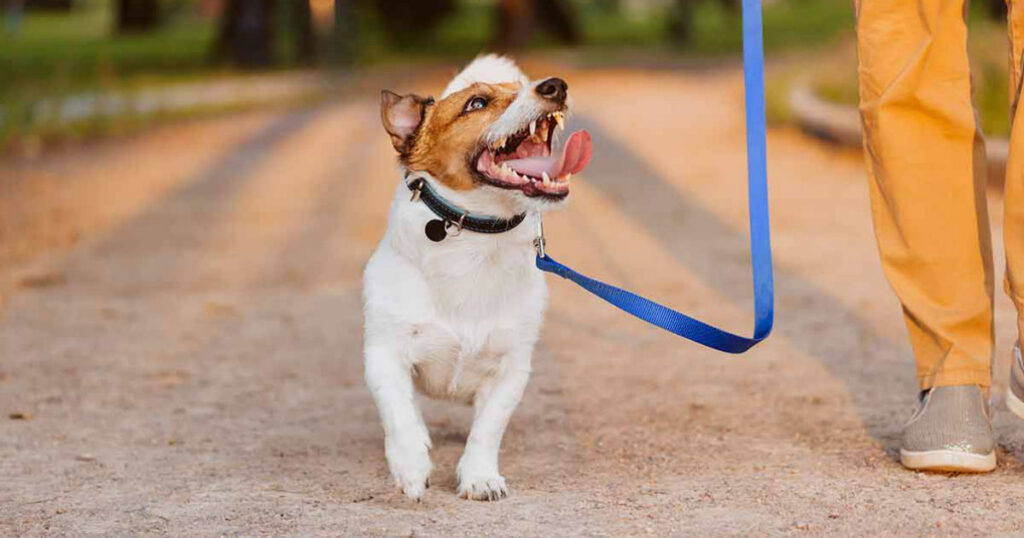
The walk to the mailbox had become a negotiation.
The dog hit the end of the leash before the handler’s feet cleared the driveway. By the time they reached the road, the leash was a tow rope. The handler’s shoulder hurt. The dog was panting and scanning. They turned around early more often than they finished the loop. They had tried a different harness, a different collar, and more exercise. The pulling did not stop.
They asked what they were doing wrong. The short answer was that the dog had learned something useful. Pulling produced forward motion, more smells, and more of the world. As long as the walk continued with the leash tight, the dog got paid for the behavior the handler wanted to stop.
That is the entire problem. And it is the entire solution.
Why Dogs Pull
Dogs pull because pulling works. The faster they move, the more stimulation they reach. Most owners do not mean to reward it. They simply keep walking because stopping feels like it will take longer or because they want the dog tired. The dog does not know the difference between “I am trying to finish the walk” and “tight leash means we keep going.” The dog only knows what happens next.
It is not dominance. It is not the dog being stubborn. It is momentum and reinforcement. Equipment can help you manage the force so you do not get dragged. A front-clip harness or a well-fitted collar can make training walks safer. It does not teach the dog that a slack leash is the only way the walk continues. A retractable leash makes the problem worse because the dog constantly practices pulling. The tool is not the lesson.
The LET’S GO Standard
Alaska Dog Works uses one cue for the walking position that does not allow pulling: LET’S GO. It means the dog is in position on the left side, the leash has slack, and the handler controls the direction and pace. The dog can look around. The dog does not have to stare at the handler the entire time. The leash simply cannot be tight.
The rule is simple, and it has to be consistent. Slack leash equals the walk continues. Tight leash equals the walk stops. Not a lecture. Not a jerk that comes ten feet after the dog already won the distance. The moment the leash goes tight, the handler stops. When the dog returns to a position that creates slack, or at least stops pulling, the walk resumes. The handler can say LET’S GO when starting or when changing direction. The dog learns that the cue means move with me, and that tension does not create forward progress.
LOOK is the attention cue that helps when something interesting appears. The dog does not have to ignore the world. The dog has to choose the handler often enough to keep the leash slack. BREAK is the release when structured walking ends, and the dog can sniff or move more freely in a controlled way. The same rules still apply. A free sniff is not permission to tow the handler to the next bush.
Criteria are defined before the session. Success is a slack leash while the pair is moving. Consequences are predictable. Consistency is the multiplier. If the handler stops for three pulls, then gives up and follows the fourth because “we are almost home,” the dog learns that persistence works. The same rule applies on the quiet road, at the trailhead, and on the sidewalk in town.
How to Practice Without Turning the Walk Into a Fight
Start where the dog can succeed. Practice LET’S GO for short segments in the driveway or on the quiet road before you try the full loop. Five or ten minutes of clean walking teaches more than a thirty-minute fight. When the dog pulls, stop. Wait for the slack. Resume. If the dog cannot hold the skill with the current level of distraction, the place is too hard. Go back one step.
Add one variable at a time. First, the quiet road with no other dogs. Then the same road when a car passes. Then a busier sidewalk or a trailhead parking area when it is quiet. Then the same place when other dogs or people are present. In Alaska, the places that matter are the ones the family actually uses: the road in front of the house, the trailhead on a Saturday, the sidewalk in Wasilla or Anchorage, the path around the park. A walk that only works in an empty parking lot has not finished the job.
Short sessions beat long arguments. The handler who stops every time the leash goes tight and resumes only when there is slack is teaching the dog the picture. The handler who keeps walking while the dog pulls is teaching the opposite. Most progress comes from the handler’s timing and follow-through, not a new piece of equipment.
What Changes When the Leash Stays Loose
The shoulder stops hurting. The walk becomes something the family will actually take on a weeknight. The dog can go to more places because the handler is no longer managing a tow rope. The same skill shows up in the Canine Good Citizen and Community Canine standards because loose-leash walking is one of the practical behaviors that lets a dog go places.
It takes consistency. The dog will test the rule, especially when something interesting appears. That is not a failure. It is information. Stop, wait for the slack, resume. Over days and weeks, the dog learns that the only way to reach the smells and the trail is to keep the leash loose.
If walks in your house have turned into a fight, the next step isn’t a different harness. It is the LET’S GO standard practiced where the pulling currently happens, with the same rule every time the leash goes tight.
Ready to look at the specific places your walks break? Book a Strategy Call, and we will map the skills that are already solid and the ones that still need a plan. Visit AlaskaDogWorks.com or call the office. The next right step is the one that gets the work started this week.
Related Articles
- AKC Canine Good Citizen: Why Every Dog Should Earn This Important Certification
- AKC Community Canine (CGCA): Taking Your Dog’s Training Beyond Basic Obedience
- How to Prepare Your Dog for Public Access Training
- Loose Leash Walking: Stop Pulling Once and For All
- Recall Training: Teaching a Reliable Come Command
- Leadership Stays: Building Calmness and Impulse Control
- Why Your Dog Doesn’t Listen Outside
- Understanding Dog Reactivity and How to Address It
- Rescue Dog Training: Building Confidence After Adoption
- The Importance of Socialization for Puppies
- Service Dog Training: What It Really Takes
- Therapy Dogs vs. Service Dogs: Understanding the Difference
- Common Dog Training Mistakes Owners Make
- Why Consistency Matters More Than Commands
- The Truth About Positive Reinforcement Dog Training
Where to Listen to Dog Works Radio

Dr. Robert Forto
is Alaska Dog Works’ training director.

Michele Forto
is the lead trainer for Alaska Dog Works.
Subscribe to the Dog Works Radio podcast, and check out The Pack newsletter, delivered straight to your inbox.
If you purchase through our links, Alaska Dog Works may earn a commission. Prices were accurate at the time of publication but may change.
We offer a FREE Strategy Call.
Click on the graphic to learn more


Read More


Managing Holiday Stress with Your Dog: Tips for Keeping Your Pup Calm During the Busy Season