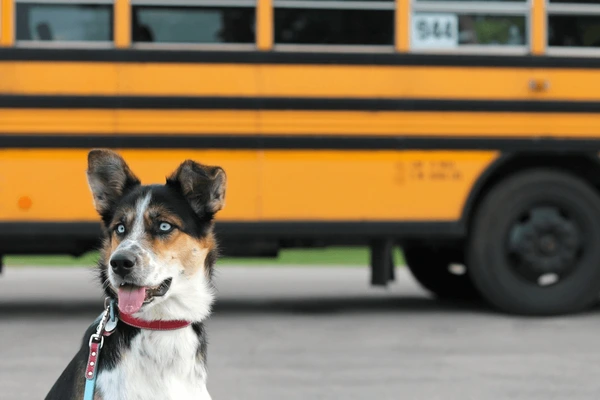
For families across Alaska, August brings one of the biggest routine changes of the year. Summer schedules begin to wind down, backpacks appear by the front door, alarms are set earlier, and parents start preparing children for another school year. In the Anchorage School District, for example, students in grades 1–6 and 9 return on August 19, followed by students in grades 7–8 and 10–12 on August 20, with Pre-K and kindergarten beginning on August 26.
Parents spend plenty of time thinking about how their children will handle the transition, especially younger children heading into a new classroom, riding the bus for the first time, or returning to an organized schedule after an Alaska summer. But there is another member of the family who may notice the change just as quickly: the dog.
Your dog has spent the summer learning a routine, too.
Maybe the kids have been home most of the day. Maybe mornings have started later. There have been more trips outside, more activity around the house, more visitors, camping weekends, evening walks, and somebody almost always available to toss a ball or rub behind an ear. Then school starts, and almost overnight the house becomes quiet.
For some dogs, that change is no big deal. For others, it can lead to boredom, destructive behavior, excessive barking, house-training problems, attention-seeking behavior, or signs of separation anxiety. The good news is that families can do quite a bit to ease the transition, and many of the same principles that help children adjust to school also apply to dogs.
Start the School Routine Before the First Day
One of the best things parents can do for young children is begin adjusting the household schedule before school actually starts. Bedtimes move earlier. Breakfast happens at a predictable time. Clothes are laid out. Backpacks are packed. The goal is to avoid making the first morning of school the first morning of an entirely new routine.
Do the same thing for your dog.
If your family has been sleeping until 9:00 during the summer but everyone will soon be moving at 6:30, start shifting the dog’s schedule now. Move breakfast, potty breaks, walks, play sessions, and quiet time toward the schedule you expect to follow once school begins.
Dogs are remarkably good at learning patterns. When those patterns change abruptly, some dogs struggle. Veterinary behavior experts recommend preparing dogs for the back-to-school transition by identifying what will change from the dog’s perspective and practicing the new routine before the family suddenly disappears for much of the day.
Think of it as training for the school year rather than waiting for problems to appear.
Practice Being Apart While Everyone Is Still Home
This is especially important for puppies, recently adopted dogs, and dogs that have spent nearly every day surrounded by children during the summer.
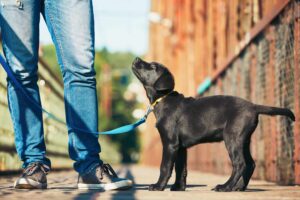
If your dog has followed the kids from the bedroom to the kitchen to the backyard for the past three months, don’t expect him to understand why everyone suddenly leaves one Wednesday morning automatically.
Begin practicing short periods of independence now.
Have your dog settle in another room while the family is home. Give him an appropriate chew or enrichment activity and allow him to become comfortable without constantly following someone around. Take short trips out of the house without the dog. Gradually practice the routine that will become normal once school starts.
The objective isn’t to make your dog enjoy being abandoned. It is to teach him that being alone for reasonable periods is normal, safe, and temporary.
Make School Mornings Work for the Dog, Too
School mornings with young children can quickly become chaotic. Someone can’t find a shoe. Lunch isn’t packed. A permission slip needs a signature. The bus is coming. Meanwhile, the dog hasn’t been outside yet and is bouncing around the kitchen because everyone is moving at twice their normal speed.
Build the dog into the morning schedule instead of treating him as one more problem to handle.
A morning walk, a structured play session, a training session, or a mix of physical and mental activities can help prepare your dog for the quieter portion of the day. Veterinary behavior guidance also commonly recommends appropriate morning exercise to help prepare dogs for longer periods at home.
This doesn’t have to mean an hour-long hike before sunrise. Ten or fifteen focused minutes can make a difference. Practice obedience. Work on leash manners. Play a structured game of fetch. Ask your dog to perform a few behaviors for breakfast rather than simply pouring food into a bowl.
A dog who has had an opportunity to move, think, work, and use the bathroom is much better prepared to settle when everyone leaves.
Be Careful About Accidentally Creating Separation Problems
There is an important difference between a dog who would rather have the family home and a dog experiencing true separation-related distress.
A bored dog might grab a shoe or raid the trash. A dog experiencing significant anxiety may pace, pant, vocalize continuously, scratch at doors or windows, attempt to escape, destroy objects near exits, eliminate despite being house-trained, or become distressed as soon as the family begins preparing to leave.
Those behaviors shouldn’t simply be dismissed as the dog being “mad” that everyone went to school.
Changes in household routine and sudden reductions in companionship can contribute to behavioral problems, which is why gradual preparation is so important. Significant or persistent anxiety may also require help from a veterinarian and a qualified dog trainer or behaviorist.
The earlier families recognize a developing problem, the easier it is to create a plan rather than allowing weeks or months of unwanted behavior to become established.
Don’t Make Leaving the House a Major Event
Parents sometimes unintentionally turn departures into moving ceremonies.
“Mommy has to go now. Be a good boy. We’ll be back soon. I promise. Don’t be sad.”
Meanwhile, the dog is watching everyone put on jackets, grab backpacks, pick up keys, and rush toward the door.
Dogs become very good at recognizing departure cues. Shoes, keys, backpacks, lunchboxes, and even the sound of the garage door can become predictors that the family is leaving.
Keep departures calm and predictable. The same applies when everyone comes home. It is perfectly fine to be happy to see your dog, but you don’t need to turn every arrival into five minutes of uncontrolled jumping, barking, and excitement.
Calm departures and calm reunions help reinforce the idea that people leaving and returning are ordinary parts of everyday life.
Give Your Dog Something Productive to Do
Once the house becomes quiet, your dog needs an appropriate way to spend the day.
Food puzzles, stuffed toys, safe chews, scent games, and other enrichment activities can give dogs something constructive to work on when the family leaves. The right choice depends on the individual dog, and anything left with an unsupervised dog should be something you already know the dog can use safely.
You can also make breakfast part of the activity. Instead of feeding the entire meal from a bowl, use some of the dog’s food for training and place the remainder in an appropriate enrichment toy.
Mental work matters. A dog doesn’t necessarily need constant entertainment, but he does need opportunities to engage his brain and then learn how to settle.
Give the Kids a Job in the Dog’s Routine
Back-to-school season is also a great opportunity to teach young children about responsibility.
Depending on their age, children can help fill the dog’s water bowl, measure food with supervision, practice simple obedience exercises, put away dog toys, or participate in an evening family walk.
Keep the responsibilities realistic. A six-year-old should not be responsible for walking a powerful dog alone, and young children should always be supervised during interactions with dogs. But small, consistent responsibilities can help children understand that the family dog still needs attention even when school, homework, sports, and other activities return.
This is also an excellent time to reinforce household rules. Don’t bother the dog while he is eating. Don’t climb on him. Don’t take toys from his mouth. Don’t chase him when he walks away. Give him a quiet place where he can rest without being disturbed.
Those simple rules are part of dog training, but they are also part of teaching children how to live safely and respectfully with animals.
Remember That After-School Energy Goes Both Ways
When children come through the door after school, the house can go from silent to chaotic in seconds.
Your dog may have been sleeping for several hours and suddenly hears backpacks hitting the floor, children talking, doors opening, friends arriving, and snacks coming out of the pantry.
This is a perfect opportunity for structure.
Instead of allowing the dog to explode into the entryway and jump all over the kids, practice a place command, sit-stay, or calm greeting routine. Once everyone is settled, the dog can receive attention or head outside for a walk or play session.
These daily moments are when dog training is most useful. Training isn’t something that only happens during a scheduled lesson. It is how the dog learns to function within the family’s actual life.
Back to School Is Really About Routine
There is a reason routines help both children and dogs. Predictability makes life easier to understand.
Your child learns that the alarm rings, breakfast comes next, the backpack goes by the door, and the bus arrives at a certain time. Your dog learns that mornings include a potty break and some activity, the family leaves, the house becomes quiet, and everyone eventually returns.
That predictability may create confidence.
The mistake is waiting until the first week of school to change everything all at once. If your children are returning to school soon, use the remaining days to begin practicing the routine your household will actually follow.
Move breakfast earlier. Take the morning walk. Practice short departures. Work on calm greetings. Give your dog independent time. Refresh basic obedience skills. Decide who will handle the dog’s afternoon and evening needs once homework and activities begin.
Back-to-school preparation isn’t only about pencils, backpacks, lunchboxes, and new shoes. For Alaska families with dogs, it is also an opportunity to reset the household routine and ensure every family member is ready for the season ahead.
At Alaska Dog Works, we work with families to build dogs that thrive in real family routines. If the return to school exposes problems such as separation anxiety, destructive behavior, jumping, excessive barking, poor manners, or a dog that doesn’t know how to settle when the household changes, professional training can help. The goal isn’t just a dog that behaves during a training session. It’s a dog that knows how to be part of your family, whether the kids are home for summer vacation or heading out the door for another Alaska school year.
Where to Listen to Dog Works Radio

Dr. Robert Forto
is Alaska Dog Works’ training director.

Michele Forto
is the lead trainer for Alaska Dog Works.
Subscribe to the Dog Works Radio podcast, and check out The Pack newsletter, delivered straight to your inbox.
If you purchase through our links, Alaska Dog Works may earn a commission. Prices were accurate at the time of publication but may change.
We offer a FREE Strategy Call.
Click on the graphic to learn more



Read More