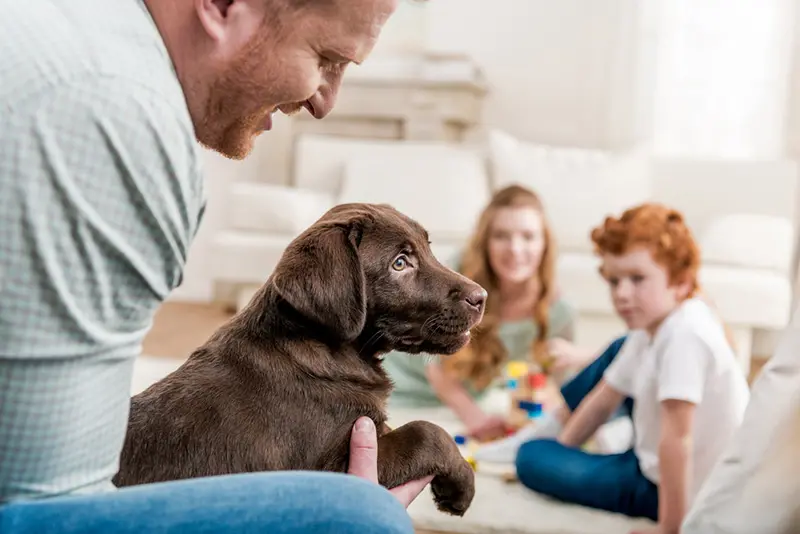
In December, the focus was on preparation. Picking the right puppy. Getting the crate ready. Talking about how important training would be once the excitement settled down. Now the house is back to normal, the holiday glow has faded, and that tiny puppy is bigger, louder, and a lot more confident.
Two months in is a turning point. This is where good intentions either turn into structure or slowly fall into frustration. What you do right now will shape the dog you live with for the next ten to fifteen years.
The first priority is tightening your routine. By this stage, your puppy should be living inside a reliable rhythm. Feeding times should be consistent. Potty breaks should be scheduled instead of reactive. Crate time should feel normal, not negotiable. When accidents continue at this point, it is almost always a breakdown in structure rather than a stubborn puppy.
Dogs relax when they understand what happens next. A clear daily rhythm builds confidence and reduces anxiety, which directly improves learning.
Second, it is time to move beyond basic commands. Most owners teach sit and down and assume they are “doing training.” In reality, those are just starting points. At two months in the home, your puppy should be developing reliable recall, early loose-leash walking skills, and impulse control. That means waiting at the doors instead of charging through them. It means greeting people without jumping. It signifies choosing to focus on you, even though the world is interesting. This is also the age when puppies begin testing boundaries. If expectations do not increase now, adolescence will feel overwhelming later.
Socialization should still be a major focus. And socialization does not simply mean letting your puppy play with other dogs. It means exposure to different environments, sounds, surfaces, people, and handling experiences in a controlled and positive way. The socialization window closes faster than most people realize. A puppy who calmly experiences new situations today is far less likely to develop fear-based behaviors later. Avoiding new experiences because your puppy seems unsure only allows hesitation to grow. Guided exposure builds resilience.
This is also the time to address behaviors that may still seem “cute.” Nipping, jumping, counter-surfing, and door-darting are not harmless phases. They are behaviors being rehearsed. What a dog practices, a dog improves at. If your puppy has been allowed to jump on guests or mouth during play, those habits are strengthening every day.
Correcting them at four months is simple. Correcting them at ten months is much harder. Early clarity prevents long-term frustration.
Most importantly, you should begin thinking long-term. What kind of dog do you want a year from now? Do you want off-leash reliability on Alaska trails? A calm dog in public spaces? A therapy dog working in churches or professional offices? A service dog prospect for mobility or medical alert work? Foundation training determines what is possible later. You cannot skip the foundation and expect advanced capability.
At Alaska Dog Works, we see this pattern every year. Families wait until the puppy is 6 or 8 months old, when behaviors are ingrained. The smarter move is to invest in structure now. Two months into ownership is the ideal time to plug into a professional program that raises expectations, strengthens communication, and gives you a definite plan.
Whether that means joining our Peak Camp membership for structured companion training, beginning foundations for therapy certification through our DAWGS program, or building early skills for future service work, the goal is the same. We build capable dogs and confident handlers. We focus on criteria, meaningful reinforcement, and consistency because these are what create reliability.
If things are going well, this is the moment to accelerate progress. If things feel chaotic, this is the moment to reset and get clarity. Waiting only makes the work heavier.
Your Christmas puppy is no longer brand new.
Two Months After a Christmas Puppy: What You Should Be Training Now
If you brought home a puppy for Christmas, you are about eight weeks into real life with your dog. The novelty has worn off, the puppy is more confident, and small habits are starting to harden. This is the moment when training either becomes a steady plan or turns into constant damage control.
The good news is that you are still early. You can shape behavior quickly right now, as long as you focus on foundations that actually matter in a family home.
The Training Priorities at the Two-Month Mark
Build a reliable routine that removes confusion
By now, your puppy should be living inside a stable rhythm that includes meals, potty breaks, rest, and supervised play. When owners feel like the puppy is “random,” it is usually because the day is random. A stable schedule reduces accidents, lowers arousal, and makes training sessions more effective because your dog is not constantly guessing what happens next.
Routine is also where independence is built. Calm crate time, short separations, and planned downtime prevent the clingy, frantic behavior that shows up later when a dog never learns to settle.
Raise the bar beyond basic commands
Most puppies learn “sit” early, but sitting on cue is not what makes a dog easy to live with. At this stage, you want skills that improve daily life: coming when called, walking without dragging you, remaining calm when someone enters the house, and being able to focus even when something exciting is happening.
This is also when you begin teaching impulse control in normal moments. Your puppy should learn that good things happen when they wait, check in, and follow guidance instead of launching forward. Those small reps are what prevent door-dashing, jumping, and adolescent chaos later.
Keep socialization going, but do it on purpose
Socialization is not a one-time checklist, and it is not only about meeting other dogs. It is about building calm neutrality around the real world: different surfaces, sounds, people, handling, grooming, car rides, and new environments. At two months in the home, you should still be creating positive exposures that teach your puppy that novelty is safe and manageable.
If your puppy is hesitant, this is where owners often accidentally make things worse by either forcing the situation or avoiding it completely. The better approach is guided exposure at the puppy’s pace, paired with rewards and a obvious exit strategy.
Fix nipping, jumping, and “cute” bad habits before they mature
Mouthing, jumping, counter-surfing, and stealing items are not phases you wait out. They are behaviors that improve through repetition. If your puppy has been practicing them for two months, you are seeing early versions of what will be much bigger at six to nine months.
The solution is not punishment or wrestling the puppy into submission. The solution is management, redirection, and reinforcement of the behaviors you actually want, repeated consistently until your puppy defaults to them.
What Owners Commonly Miss Right Now
Two months in, many owners are still training in short bursts but living the rest of the day on autopilot. The puppy then learns two different rulebooks: one for “training time” and one for the rest of the house. If you want real obedience, your expectations have to show up during daily moments, not just during a five-minute session.
This is also when adolescence starts quietly loading in the background. If you wait until your puppy is ignoring you, pulling hard, barking, or reacting to everything, you will need twice the effort to get back to calm foundations. Working now is the easiest and cheapest work you will ever do.
How Alaska Dog Works Can Help at the Two-Month Stage
This stage is exactly where professional structure makes the biggest difference. You do not need a trainer because you “failed.” You need a system so you do not accidentally waste the next four months training bad habits.
Alaska Dog Works helps owners by building a clear plan around real-life outcomes: a dog that can settle, walk politely, come when called, and behave in the places Alaskans actually go. If your goal is a solid family companion, we can tighten foundations through a structured training path. If your long-term goal is therapy dog work, we can help you build the calm, stable behaviors that certification-level dogs need. If you are considering service dog foundations, early criteria and consistency are critical, and we can help you set those standards correctly from the start.
The result is not simply a better-behaved puppy. It is a confident handler who knows what to do next week, next month, and when the adolescent phase hits.
When to Get Help Instead of “Waiting It Out”
If you are seeing repeated accidents, persistent biting, intense jumping, worsening leash pulling, or stress around normal life events like visitors and car rides, that is not a sign you should wait. It is a sign you should put structure in place now, while your puppy is still highly malleable.
If things are going well, training support still helps because it accelerates reliability and prevents the common mid-year backslide when puppies turn into teenagers.
FAQ about Christmas Puppies
Your puppy should be progressing toward a predictable potty routine, comfort with a crate or safe confinement, early recall foundations, basic leash manners, and the ability to settle with guidance. The goal is not perfection. The goal is momentum and consistency.
No, but it is the best time to fix it. These behaviors become harder as your puppy grows and practices them daily. Early intervention is faster and more effective.
Short sessions work best, but the bigger win is carrying expectations into everyday moments. A few minutes of focused practice, repeated consistently, beats long sessions done sporadically.
Facebook
Twitter
LinkedIn
We offer a FREE Strategy Call.
Click on the graphic to learn more



Read More