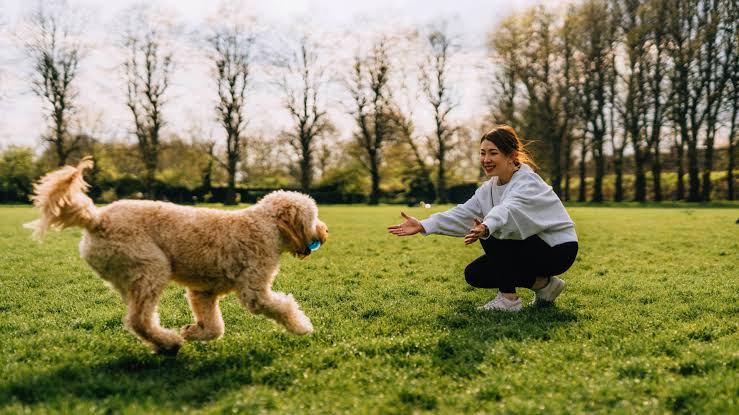
One Word Can Change Everything
There are countless behaviors dog owners hope to teach over the course of their dog’s life. They want a reliable sit before meals, polite leash manners during neighborhood walks, calm greetings when visitors arrive, and the ability to settle quietly while the family enjoys dinner. All of those skills make life easier, strengthen the relationship between dog and owner, and help dogs become welcome companions in more places. Yet among all the commands a dog can learn, one stands above the rest because it has the potential to protect not only your convenience, but your dog’s life.
Recall is simply your dog’s ability to return to you immediately when called, regardless of what else is happening around them. On the surface, it sounds like a straightforward exercise. Call your dog’s name, say the cue, and reward them when they arrive. In reality, however, recall is one of the most important and one of the most challenging behaviors any dog will ever learn. It requires trust, repetition, consistency, and an understanding that coming back to their owner is always the best decision they can make.
At Alaska Dog Works, we often tell clients that we hope they never need to rely on a perfect recall during an emergency. The reason we spend so much time teaching it is because emergencies rarely announce themselves in advance. A gate is accidentally left open. A leash slips from someone’s hand. A child forgets to latch the front door. Wildlife suddenly appears during a hike. Those moments happen in seconds, and when they do, a reliable recall can become the difference between a close call and a heartbreaking outcome.
Dogs Live in a World Filled With Distractions
Imagine standing in the middle of your favorite sporting event while someone quietly calls your name from the other side of the stadium. Even if you hear them, your attention is divided by everything happening around you. Dogs experience something similar every time they step outside. The neighborhood is filled with scents, sounds, movement, other animals, unfamiliar people, bicycles, squirrels, birds, and countless other distractions competing for their attention.
Expecting a dog to ignore all of those competing interests simply because their owner called once isn’t realistic unless that response has been practiced repeatedly under gradually increasing levels of distraction. This is why recall should never be viewed as something a dog either knows or doesn’t know. It exists on a spectrum. A dog may come reliably inside the living room but struggle in the backyard. They may respond perfectly in the backyard but become distracted at a public park. They may perform beautifully at the park until another dog appears across the field.
Each new environment introduces another level of difficulty, and every successful repetition helps strengthen the habit of choosing the owner over the distraction. Building that reliability takes time, but it’s precisely what transforms recall from a simple obedience exercise into a dependable life skill.
Recall Is Built on Trust, Not Fear
Years ago, many training philosophies relied on harsh corrections to force dogs to comply with commands. While those approaches sometimes produced immediate results, they often damaged the very relationship recall depends upon. Dogs that fear making mistakes may hesitate instead of responding confidently, especially when uncertainty or distractions enter the picture.
A reliable recall grows from something much stronger than fear.
It grows from trust.
Dogs return willingly because experience has taught them that coming back to their owner consistently leads to positive outcomes. Sometimes that reward is a favorite treat. Sometimes it’s a game, enthusiastic praise, another opportunity to explore, or simply the comfort of being close to someone they trust. Over time, the dog develops a powerful reinforcement history that tells them choosing their owner is almost always the best decision available.
That trust becomes especially important during stressful situations. Dogs rarely stop to evaluate commands logically when they’re frightened or excited. Instead, they rely on habits they’ve practiced countless times before. The stronger those habits become, the more likely they are to make the right decision when it matters most.
One Mistake Can Undo Weeks of Progress
Many owners unintentionally weaken recall without realizing they’re doing it. Consider what often happens at the dog park. The owner calls the dog several times while the dog continues playing. Eventually the dog returns, only to have the leash clipped on and the fun immediately ends. From the dog’s perspective, responding to the recall cue marked the conclusion of everything enjoyable.
After enough repetitions, the lesson becomes obvious.
Coming when called makes the fun stop.
It’s no surprise that many dogs begin hesitating the next time they’re called.
Successful recall training works differently. Owners frequently call the dog, reward the response, and then allow the dog to return to playing. That simple decision teaches an entirely different lesson. Coming when called doesn’t always end the adventure. Sometimes it simply becomes another enjoyable part of it. By protecting the value of the recall cue, owners preserve their dog’s enthusiasm for responding quickly every time they hear it.
Practice Before You Need It
No one buys car insurance because they hope to use it on the drive home. They purchase it because they understand preparation matters long before an emergency occurs. Recall training deserves the same mindset.
Waiting until your dog escapes through an open gate is not the time to begin teaching them to come when called. That lesson should already be deeply familiar long before an unexpected situation develops.
The most reliable recalls are built gradually. They begin inside quiet rooms with very few distractions. As the dog becomes successful, the environment slowly becomes more challenging. A fenced backyard replaces the living room. A long training line introduces additional freedom while preserving safety. Parks, trails, and other locations are added carefully as the dog’s confidence and reliability continue growing.
Each successful repetition becomes another deposit into what many trainers think of as a trust account. By the time a genuine emergency occurs, the dog isn’t making a brand-new decision. They’re repeating a habit they’ve practiced hundreds of times before.
Recall Strengthens Every Part of Your Relationship
While safety is the primary reason recall matters, its benefits extend well beyond emergencies. Owners who invest time developing a dependable recall often discover that communication improves in many other areas as well. The dog becomes more attentive during walks because checking in with the owner has become rewarding. Off-leash adventures become more enjoyable because both dog and owner feel more confident. Training sessions become smoother because the dog has learned that responding to cues consistently leads to good outcomes.
Perhaps most importantly, recall reinforces the idea that staying connected to the owner is valuable. Rather than viewing freedom and obedience as competing ideas, dogs begin understanding that choosing their owner often creates even greater opportunities for exploration and adventure.
That shift in perspective transforms training from a series of commands into a partnership built on cooperation.
Every Family Benefits From a Reliable Recall
Many people assume recall is most important for hunting dogs, sporting breeds, or families who spend weekends hiking in the mountains. While those dogs certainly benefit from a dependable response, recall is equally valuable for suburban families, apartment dwellers, and owners whose dogs rarely leave the neighborhood.
Accidents don’t discriminate based on lifestyle.
Front doors are left open.
Children forget to latch gates.
Collars break.
Leashes slip from hands.
Construction crews leave fences unsecured.
Dogs become startled by unexpected noises.
Every one of those situations has happened to families who believed it would never happen to them. None of them planned for the emergency. They simply wished their dog had been prepared for it.
Teaching recall isn’t about expecting something to go wrong.
It’s about ensuring your dog knows exactly what to do if it ever does.
The Best Time to Begin Is Long Before You Need It
One of the reasons we’re focusing on recall as part of our Christmas in July series is because meaningful reliability can’t be built in a weekend. By the time holiday visitors arrive, doors begin opening more frequently, children race in and out of the house, and family gatherings create unfamiliar distractions, your dog should already understand that returning when called is one of the most rewarding decisions they can make.
Those habits aren’t developed during the excitement of the holidays.
They’re developed during the quiet days of summer, the ordinary evenings after work, and the routine walks around the neighborhood. Every successful recall today becomes another layer of confidence you’ll appreciate months from now when life inevitably becomes busier.
Building a Lifelong Safety Net
At Alaska Dog Works, we believe every dog deserves the opportunity to learn a reliable recall because every family deserves the peace of mind that comes with knowing their dog understands how to return when it matters most. While no behavior is ever completely finished, recall is one of those skills that should remain part of your dog’s life from puppyhood through their senior years. It should be practiced, rewarded, and protected because its importance never diminishes.
If you teach your dog only one behavior exceptionally well, make it recall. A perfect sit may impress your friends. A beautiful heel may make your walks more enjoyable. A reliable down-stay may demonstrate excellent training. But a dependable recall has something those other commands cannot offer. It has the ability to bring your dog safely back to you when they need you most.
If you’d like to build a reliable recall that gives your family greater confidence and your dog greater freedom, schedule a training evaluation with Alaska Dog Works today. Together, we’ll help your dog develop one of the most valuable skills they’ll ever learn.
Where to Listen to Dog Works Radio

Dr. Robert Forto
is Alaska Dog Works’ training director.

Michele Forto
is the lead trainer for Alaska Dog Works.
Subscribe to the Dog Works Radio podcast, and check out The Pack newsletter, delivered straight to your inbox.
If you purchase through our links, Alaska Dog Works may earn a commission. Prices were accurate at the time of publication but may change.
We offer a FREE Strategy Call.
Click on the graphic to learn more



Read More