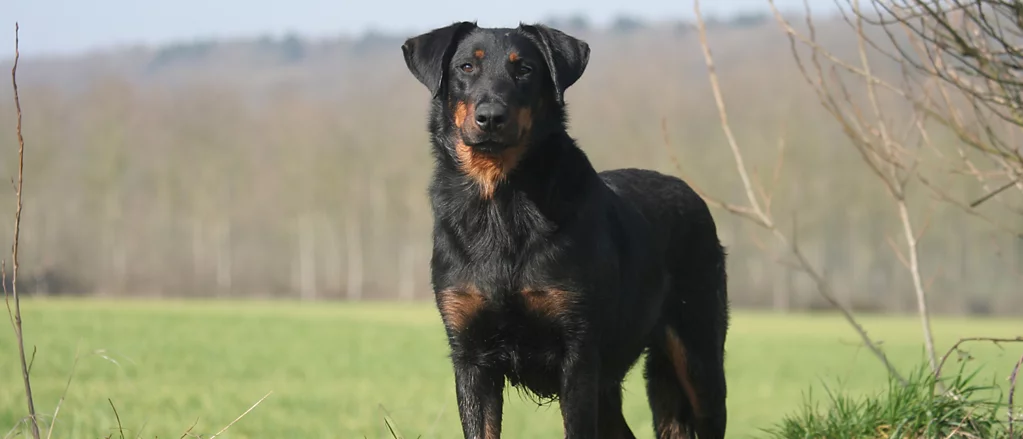
The Beauceron is not a casual companion breed. It is a French herding and guardian dog with size, stamina, intelligence, and a strong sense of its own job. People are often drawn to the look first, the black-and-tan coat, the presence, the seriousness. Then they discover they have a 70- to 110-pound dog that notices everything and will fill any leadership gap it finds.
At Alaska Dog Works, we work with high-drive dogs every week. The Beaucerons that succeed in homes are not the ones given the most freedom. They are the ones given the most clarity.
This is an expanded guide to training the breed the way it actually needs to be trained.
Understanding Beauceron Temperament
A well-bred Beauceron is loyal, steady, and deeply attached to its people. It is also reserved with strangers, physically powerful, and slow to fully mature. Many are still mentally adolescent at two years old. Some are not truly settled until closer to three.
That matters because owners often treat a large 10-month-old Beauceron like an adult. The body looks ready. The brain is not.
Typical breed traits we plan around:
- high intelligence
- strong working drive
- natural guarding instinct
- sensitivity to harsh handling
- need for a job
- slow physical and mental maturity
This is not a breed that does well with chaos, inconsistent rules, or “we’ll just love it into being good.” A Beauceron needs a calm, confident handler who means what they say.
Is a Beauceron the Right Dog for You?
This breed fits experienced, active owners who can provide daily structure. It is a poor match for first-time owners who want a low-maintenance house dog.
A Beauceron is more likely to thrive if you can offer:
- firm, fair leadership
- daily physical work
- daily mental work
- consistent household rules
- early and ongoing socialization
- a purpose beyond sitting on the couch
If those pieces are missing, the same intelligence that makes the breed impressive will be used to patrol, push, bark, and test.
Beauceron Puppy Training: The First 16 Weeks
Start immediately. A Beauceron puppy grows fast, and bad habits grow with it.
The first 16 weeks should include:
- Name recognition and engagement
- Sit, down, and a short stay
- Coming when called in quiet settings
- Crate training and settling
- Handling of mouth, paws, ears, and collar
- Door manners
- Controlled exposure to people, surfaces, sounds, and environments
Keep sessions short and frequent. Five minutes of focused work beats twenty minutes of sloppy repetition. This breed notices when you get sloppy.
Socialization is not optional. Beaucerons can be naturally watchful. If they are not introduced to a wide range of people and situations early, that watchfulness can turn into suspicion. The goal is a dog that can assess a situation and remain neutral, not one that decides every new person is a problem.
Foundation Obedience for a Large Working Breed
These are the skills that matter first:
- Sit and down as default positions
- Stay / wait at doors, gates, and before food
- Heel / loose-leash walking
- Come on a long line before off-leash freedom
- Place so the dog can settle while the house is active
- Leave it and drop it
- Calm greetings, because a jumping Beauceron is a safety issue
A 20-pound puppy jumping on guests is inconvenient. A 90-pound adolescent doing the same thing is a liability. Teach the manners while the dog is still small enough that mistakes are easy to interrupt.
Channeling Herding and Guarding Instincts
The Beauceron was built to work. If you do not give it a job, it will assign itself one.
Useful outlets include:
- structured obedience
- tracking or scent work
- hiking with rules
- place work during family activity
- advanced heeling
- controlled retrieving
- herding or herding-style games if available
What does not count as a job: being left in the yard to “run it off,” barking at everything that moves, or pacing the fence line. That is rehearsal, not training.
Guarding instinct needs direction. We want a dog that can be watchful without becoming reactive. That comes from early socialization, clear thresholds at the door, and a handler who can call the dog off and have it listen.
Impulse Control and Leadership
Most Beauceron problems are not mysterious. They come from a powerful dog that has not been taught to wait.
Daily impulse-control work should include:
- wait at doors
- wait for the food bowl
- hold a down while people move around
- look back to the handler around distractions
- release only on a known cue
This breed tests. That is normal. Testing is how it learns whether the rule is real. If the answer changes from person to person, or from Monday to Friday, the dog will keep checking.
Leadership here does not mean intimidation. Beaucerons generally do not respond well to harsh, sloppy correction. They respond to clarity, timing, and follow-through.
Common Beauceron Training Mistakes
Waiting too long to start.
By six months, you already have a large, opinionated adolescent.
Giving too much freedom too soon.
Off-leash privileges have to be earned. A Beauceron with a weak recall and a strong prey or patrol instinct is a problem waiting to happen.
Under-exercising the brain.
A long walk is not enough if the dog never has to think.
Treating guarding as “protective,” so it gets rehearsed.
Barking at every stranger is not a badge of honor. It is a habit.
Using the same plan you would use for a Labrador.
This breed needs more structure, more clarity, and a longer view of maturity.
Training a Beauceron in Alaska
Alaska is a good fit for the right Beauceron and a bad fit for an under-trained one.
The breed can handle cold and outdoor work. That is not the issue. The issue is distraction level. Wildlife, open space, and long property lines give a watchful dog plenty to patrol. If the dog is allowed to rehearse fence-running, wildlife chasing, or barking at every approaching person, those habits get strong fast.
Winter also changes the training week. When daylight is short and the ground is ice, keep the program alive indoors: place work, impulse control, scent games, handling, and short obedience sessions. The dogs that stay manageable through January are usually the ones whose owners did not take the season off.
Recall around moose, hares, or loose dogs must be built on a long line first. Do not give this breed unsupervised freedom because “it usually comes back.”
A Practical Training Plan by Age
8-16 weeks
Short sessions, crate and settle work, name, sit, down, come, handling, and controlled socialization.
4-8 months
Leash manners, longer stays, place work, leave-it, and more real-world environments. Keep the dog from practicing jumping and door barging.
8-18 months
This is the hard stretch. Expect testing. Increase structure, not freedom. Proof recall, down-stays, and neutrality around people and dogs.
18 months-3 years
Continue training as the dog matures. Add more advanced work and a consistent job. Do not assume the dog is “done” because it knows the commands at home.
When to Get Professional Help
Call in help if you are seeing:
- growing reactivity toward strangers or dogs
- guarding of property, people, or objects that is getting sharper
- a recall that collapses around movement or wildlife
- an adolescent that is becoming harder to handle, not easier
- a household that cannot agree on the rules
A powerful breed does not need more time to “grow out of it.” It needs a plan before the habits are fully installed.
Learn more about another popular breed, the Jack Russel Terrier
Learn more about service dog training in Alaska
Frequently Asked Questions
They learn quickly. They are not easy in the sense of low-effort. The breed needs an experienced, consistent handler.
Most adults need substantial daily physical work plus mental work. A short neighborhood walk is not enough.
They can, in the right home. They need manners around children, early socialization, and adults who can run the structure. This is not a self-managing family pet.
Often not until two to three years old. Train with that timeline in mind.
Yes, if the dog has enough work, enough structure, and a handler who can manage wildlife, weather, and space. The climate is not the hard part. The freedom is.
No. This breed generally does poorly with heavy-handed, sloppy pressure. Firm, fair, and consistent works. Rough and emotional does not.
Where to Listen to Dog Works Radio

Dr. Robert Forto
is Alaska Dog Works’ training director.

Michele Forto
is the lead trainer for Alaska Dog Works.
Subscribe to the Dog Works Radio podcast, and check out The Pack newsletter, delivered straight to your inbox.
If you purchase through our links, Alaska Dog Works may earn a commission. Prices were accurate at the time of publication but may change.
We offer a FREE Strategy Call.
Click on the graphic to learn more


Read More