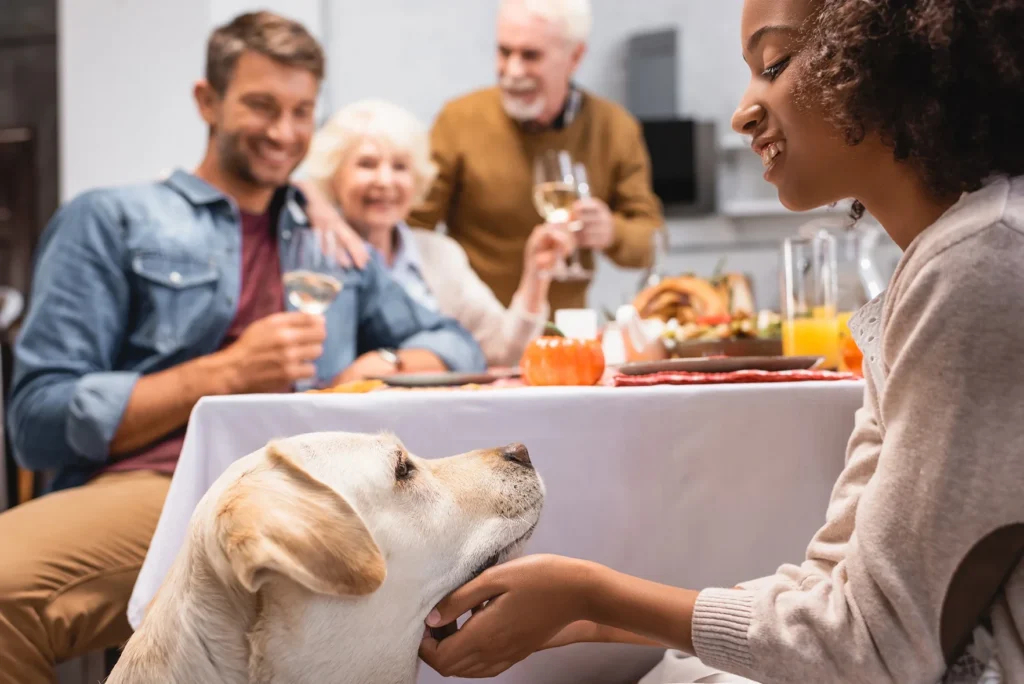
The Best Holiday Memories Begin Long Before the Guests Arrive
The holidays have a way of bringing out the best in families. They also have a way of exposing every gap in a dog’s training.
One minute your home is quiet and predictable. The next, the doorbell is ringing every few minutes, children are running through the house, relatives are arriving with suitcases, and dinner is cooking while everyone gathers in the kitchen. It’s exciting for people, but for many dogs, it’s a completely different world than the one they experience every day.
The good news is that most holiday problems can be prevented with a little planning. You don’t need a dog that performs advanced tricks or earns obedience titles. You simply need a dog that understands a handful of practical skills that make everyday life easier for everyone.
If you start working on these behaviors now, you’ll have plenty of time to build good habits before Thanksgiving and Christmas arrive.
1. Greeting Guests Without Jumping
For many dogs, every visitor is the best thing that’s happened all day. Their excitement is genuine, but not everyone appreciates muddy paws on clean clothes or an enthusiastic greeting that nearly knocks them over.
Teaching your dog to greet people calmly is one of the most valuable skills they’ll ever learn. That doesn’t mean they can’t be happy to see someone. It means they learn that keeping all four paws on the floor earns attention, while jumping does not.
This behavior isn’t built by correcting the dog after they’ve already launched into the air. It’s built by practicing calm greetings over and over with friends, neighbors, and family members throughout the year. The more opportunities your dog has to succeed before the holidays, the more natural that behavior becomes when your guests begin arriving.
2. Going to a Place and Staying There
One of the most useful commands you can teach any family dog is a simple “place” cue. Whether it’s a dog bed, mat, or raised platform, your dog learns that this is where they settle until they’re invited to leave.
During the holidays, this single behavior solves dozens of common problems. Instead of weaving between people carrying hot dishes, your dog can relax comfortably while dinner is prepared. Instead of rushing the front door every time someone arrives, they have a clear job to do. During gift exchanges or large family meals, they can remain part of the gathering without becoming the center of attention.
Teaching a dog to settle is just as important as teaching them to move.
3. Coming When Called Every Time
A reliable recall isn’t just convenient. It’s one of the most important safety skills your dog can learn.
Holiday gatherings often mean open doors, distracted guests, children playing outside, and people coming and going throughout the day. It only takes one forgotten gate or one guest leaving the front door open for a dog to wander farther than anyone expected.
A dog that immediately returns when called gives you peace of mind in situations that could otherwise become dangerous.
Building a dependable recall takes time because your dog needs to learn that coming to you is always worthwhile. Practice in your home, your backyard, on walks, and in gradually more distracting environments. Every successful repetition strengthens your dog’s confidence and makes the behavior more dependable when you need it most.
4. Walking Politely on a Leash
Holiday traditions often include neighborhood walks, trips to see Christmas lights, visits to friends and family, or outings to pet-friendly stores. A dog that pulls constantly on the leash can quickly turn those enjoyable moments into frustrating ones.
Loose leash walking isn’t about forcing your dog into a perfect position beside you. It’s about teaching them that walking together is a shared activity instead of a competition.
Like every other skill, this behavior develops through consistent practice. Short walks focused on communication are often far more productive than long walks where pulling is allowed to continue unchecked. The goal is for your dog to pay attention to where you are rather than dragging you toward every distraction along the way.
5. Relaxing Around Everyday Activity
Perhaps the most overlooked skill in dog training is learning how to do nothing.
Many dogs are taught how to sit, lie down, and come when called, but they never learn how to simply relax while life happens around them.
The holidays provide countless opportunities for practicing this skill. Family members gather in the living room to talk. Children play games. Meals are prepared. Packages are wrapped. Movies are watched late into the evening.
A dog that can quietly settle nearby without demanding constant attention becomes a welcome part of those moments instead of a source of stress.
Calm behavior doesn’t happen by accident. It’s something that can be taught, reinforced, and rewarded just like any other skill.
You Don’t Need a Perfect Dog
Many owners put unnecessary pressure on themselves when the holidays approach. They imagine every visitor judging their dog’s behavior or compare themselves to polished social media videos featuring perfectly behaved pets.
Real life doesn’t work that way.
Dogs get excited. They become distracted. They make mistakes.
The goal isn’t perfection.
The goal is having a dog that understands what’s expected and can make good choices most of the time. Those small improvements add up quickly. A dog that greets visitors politely, settles during dinner, comes when called, and walks comfortably on a leash changes the entire experience of hosting family and friends.
Start Before the Holidays Become Busy
One of the biggest mistakes families make is waiting until November to begin preparing for Thanksgiving or Christmas.
By then, calendars fill quickly with shopping, travel, school events, and holiday celebrations. Training often gets pushed aside just when it’s needed most.
Starting during the summer gives you something incredibly valuable: time.
Time for your dog to practice.
Time to build confidence.
Time to replace old habits with better ones.
By the time your first holiday guest rings the doorbell, these skills won’t feel new. They’ll simply be part of your dog’s everyday routine.
That’s exactly why we’re celebrating Christmas in July.
How Alaska Dog Works Can Help
Every family has different goals, and every dog learns at their own pace. Some dogs need help mastering the basics, while others are ready to practice those same skills in more challenging situations. Whatever stage your dog is in, the right training plan can make the months leading up to the holidays far less stressful.
At Alaska Dog Works, we focus on practical training that fits everyday family life. Our programs help dogs develop the skills that matter most at home, around visitors, on walks, and during the busy moments that make up the holiday season. Whether you choose private lessons, board and train, or puppy training, our goal is to help you build a stronger relationship with your dog while creating habits that last long after the decorations are packed away.
The holidays should be remembered for laughter, great meals, and time spent with the people you love, not for apologizing for your dog’s behavior. If you begin working on these five skills now, you’ll be well on your way to enjoying a calmer, happier holiday season together.
Schedule your training evaluation with Alaska Dog Works today and give your dog the time they need to build the skills that will make this holiday season your best one yet.
Where to Listen to Dog Works Radio

Dr. Robert Forto
is Alaska Dog Works’ training director.

Michele Forto
is the lead trainer for Alaska Dog Works.
Subscribe to the Dog Works Radio podcast, and check out The Pack newsletter, delivered straight to your inbox.
If you purchase through our links, Alaska Dog Works may earn a commission. Prices were accurate at the time of publication but may change.
We offer a FREE Strategy Call.
Click on the graphic to learn more



Read More
Tamaskan Dog Breed: Temperament, Care, and What Owners Should Know