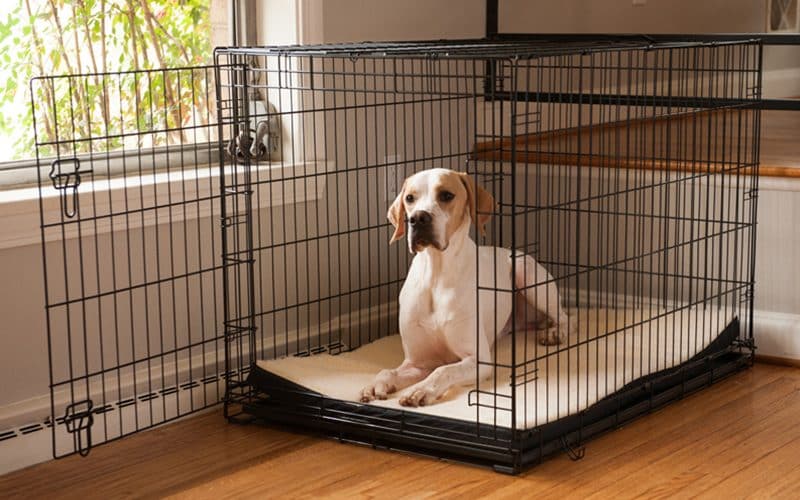
One of the Most Misunderstood Tools in Dog Training
Few topics in dog training generate as much debate as crate training. Mention the word “crate,” and you’ll often hear strong opinions from people who believe it’s cruel, unnecessary, or simply a convenient way for owners to avoid dealing with their dogs. Others see it as an essential part of raising a puppy or helping an adult dog settle into a new home. The truth lies somewhere in the middle, and like most tools in dog training, the crate itself isn’t good or bad. Its value depends entirely on how it’s introduced and how it’s used.
At Alaska Dog Works, we’ve worked with thousands of dogs over the years, from energetic puppies to senior rescue dogs beginning a new chapter of life. We’ve seen firsthand how a properly introduced crate can become one of the most valuable tools a family has. We’ve also seen how using a crate incorrectly can create frustration for both dogs and owners. That’s why it’s important to understand what a crate is actually meant to accomplish. It isn’t designed to isolate a dog from the family or serve as a place of punishment. When used thoughtfully, it’s meant to provide something every dog needs: a safe, predictable place where they can truly relax.
Dogs Naturally Look for Safe Spaces
Long before dogs became members of our families, their wild ancestors sought out sheltered places to rest, raise their young, and recover after periods of activity. While today’s dogs have evolved alongside people for thousands of years, that instinct hasn’t completely disappeared. Many dogs still prefer sleeping beneath a table, curling up behind a couch, or resting in the corner of a quiet room where they feel protected on more than one side.
If you’ve ever watched your dog disappear under a desk during a thunderstorm or retreat to a quiet bedroom when the house becomes busy, you’ve already seen this instinct at work. Dogs don’t always seek the center of activity. Often, they look for a place where they can step away from the noise, observe their surroundings, and simply rest without being disturbed.
A properly introduced crate taps into that natural preference. Instead of becoming a cage, it becomes a bedroom. Instead of representing isolation, it provides consistency in a world that often feels busy and unpredictable.
A Crate Should Never Be Associated With Fear
One of the fastest ways to create problems with crate training is to use the crate as a punishment. If every trip into the crate is followed by a scolding or occurs only after the dog has done something wrong, it doesn’t take long for the dog to develop negative feelings about that space. Rather than seeing it as a place of security, they begin to view it as the place where good things stop happening.
Imagine if every time someone was upset with you, they sent you to your bedroom and slammed the door. Eventually, you probably wouldn’t think very highly of your bedroom either. Dogs make similar associations. They remember the emotional context surrounding an experience just as much as the experience itself.
A crate should always remain emotionally neutral or, even better, emotionally positive. Meals can be served inside the crate. Favorite toys can appear there. Comfortable bedding can make it an inviting place to rest. Many dogs eventually choose to enter their crate on their own because they’ve learned that it’s a peaceful place where nothing unpleasant happens.
Puppies Benefit From Structure
One of the biggest advantages of crate training is that it provides young puppies with structure during a stage of life when everything is new. Puppies don’t arrive in our homes understanding where they’re supposed to sleep, when they’re expected to rest, or where it’s appropriate to go to the bathroom. They need guidance, and the crate can become part of a routine that helps them develop those habits more quickly.
When used appropriately, a crate supports house training by encouraging puppies to hold their bladder until they’re taken outside. It also prevents them from wandering the house unsupervised while they’re still learning what belongs to them and what doesn’t. Shoes, electrical cords, furniture, children’s toys, and countless other household items become much less tempting when a puppy isn’t left alone with unrestricted access to them.
More importantly, the crate teaches something that many young dogs struggle with: how to relax. Puppies don’t naturally know when they’re overtired. Much like young children, they often become more energetic and less focused when what they actually need is sleep. A quiet, comfortable crate helps many puppies settle and recharge before rejoining family activities.
Adult Dogs Can Benefit Too
Crates aren’t only useful for puppies. Adult dogs often discover that having a space of their own makes life easier, especially in busy households. A family with young children, frequent visitors, or multiple pets may unintentionally overwhelm a dog that simply wants a quiet place to rest for a while. A crate provides that opportunity without requiring the dog to leave the room entirely.
This can be especially valuable during the holidays. Thanksgiving and Christmas often bring houseguests, excited children, unfamiliar routines, and constant activity. While people usually enjoy those gatherings, many dogs appreciate having a familiar place to retreat when everything becomes a little too much. Giving a dog permission to step away from the excitement isn’t excluding them from the celebration. It’s respecting their need for downtime.
Many owners are surprised to discover that once a crate has been introduced properly, their dog chooses to spend time there voluntarily, even when the door remains open. That choice tells you everything you need to know about how they feel regarding that space.
Crate Training Builds Independence
Another overlooked benefit of crate training is that it helps dogs become more comfortable spending short periods alone. Dogs that have never learned how to relax independently sometimes struggle when owners leave the house, even for a short errand. They pace, bark, chew, or become anxious because they’ve never developed confidence outside of constant human interaction.
A crate isn’t a cure for separation anxiety, but it can be one piece of a larger plan that helps dogs feel secure even when life becomes temporarily quiet. By introducing the crate gradually and pairing it with positive experiences, owners help dogs understand that being alone for short periods isn’t something to fear. That lesson often carries into other parts of everyday life, creating a more confident and emotionally stable companion.
Like every aspect of training, this process should be gradual. Independence grows through positive experiences, not through forcing a dog into situations they’re unprepared to handle.
Common Mistakes Owners Make
One reason crate training sometimes develops a negative reputation is because owners unintentionally expect too much too soon. A puppy that has never been introduced to a crate isn’t likely to enjoy spending several hours inside it on the very first day. Like any new experience, crate training should happen gradually. Short, positive sessions create confidence. Long, stressful experiences often create resistance.
Another common mistake is expecting the crate to solve problems unrelated to it. A dog that hasn’t received enough exercise, mental stimulation, or opportunities to interact with their family won’t become happier simply because they’re placed in a crate. The crate is one tool within a much larger training program. It works best when combined with appropriate exercise, clear communication, predictable routines, and plenty of positive interaction throughout the day.
Finally, many owners stop using the crate as soon as their dog becomes trustworthy around the house. While that’s certainly an option, many dogs continue appreciating their crate for years because it remains their own personal space. The goal isn’t keeping the dog confined forever. The goal is giving them a place they’ll always associate with comfort and security.
Crate Training Is About Confidence, Not Confinement
Perhaps the biggest misunderstanding surrounding crate training is the belief that it’s primarily about restricting a dog’s freedom. In reality, thoughtful crate training often creates more freedom. A dog that can relax comfortably in a crate during travel, veterinary visits, grooming appointments, or overnight stays with family members is often far less stressed than a dog who has never learned that enclosed spaces can feel safe.
The same is true at home. A dog that willingly settles in their crate while dinner is being prepared or while guests arrive at the front door isn’t being punished. They’re relying on a familiar routine that helps them understand what comes next. That predictability reduces uncertainty, and reduced uncertainty often leads to calmer behavior.
Dogs don’t measure freedom the way people do. They measure safety, comfort, routine, and clear expectations. When those needs are met, many dogs become noticeably more relaxed because they no longer have to guess what the environment expects of them.
Building a Better Relationship Starts With Trust
At Alaska Dog Works, we don’t recommend crate training because it’s convenient for people. We recommend it because, when introduced correctly, it gives dogs something many of them naturally seek: a place where they can rest, recharge, and feel completely secure. Like every other aspect of training, the crate should strengthen the relationship between dog and owner rather than create fear or conflict.
If you’ve avoided crate training because you’ve worried it might be unfair to your dog, we encourage you to look at it from a different perspective. A crate isn’t a punishment when it’s introduced with patience, positive experiences, and respect for the dog’s needs. It’s simply another way of helping your dog feel safe in a busy human world.
Whether you’re raising a new puppy, welcoming an older rescue into your home, or preparing for the busy holiday season, thoughtful crate training can become one of the most valuable gifts you give your dog. It provides consistency during times of change, helps establish healthy routines, and gives your dog a place that’s entirely their own. That’s not punishment. It’s preparation for a lifetime of confidence and security.
Schedule a training evaluation with Alaska Dog Works today, and let us show you how crate training can become a positive part of your dog’s daily routine and a valuable tool for building a calmer, happier companion.
Where to Listen to Dog Works Radio

Dr. Robert Forto
is Alaska Dog Works’ training director.

Michele Forto
is the lead trainer for Alaska Dog Works.
Subscribe to the Dog Works Radio podcast, and check out The Pack newsletter, delivered straight to your inbox.
If you purchase through our links, Alaska Dog Works may earn a commission. Prices were accurate at the time of publication but may change.
We offer a FREE Strategy Call.
Click on the graphic to learn more



Read More