The Taylor Swift Effect Could Make Samoyeds the Next Must-Have Dog. Here’s What Families Need to Know
When Travis Kelce stepped off Taylor Swift’s private jet in Palm Beach, Florida, last month, it was not the newlywed NFL star who generated some of the biggest curiosity. Walking down the aircraft stairs was a fluffy white dog that appeared to be a Samoyed, one of the most recognizable working breeds in the world.
The photographs quickly made their way across entertainment media. TMZ reported on the dog’s appearance in July, while other outlets began asking the inevitable question: Has Taylor Swift, long known publicly for her cats, become a dog owner? Neither Swift nor Kelce initially provided many details about the dog, but that hardly slowed down the speculation.
Now the story has moved beyond celebrity gossip and into something those of us in the dog world should pay attention to.
The Wall Street Journal recently asked whether Swift’s enormous cultural influence could turn the Samoyed into the next French Bulldog. According to the Journal, the American Kennel Club saw a 15 percent increase in searches for Samoyeds following the dog’s highly publicized appearance. The breed currently ranks 55th in popularity in the United States, but breeders are already wondering what could happen if even a small percentage of Swift’s fan base decides they want a fluffy white dog of their own.
For professional dog trainers, breeders, rescue organizations, and responsible dog owners, that possibility deserves a much bigger conversation.
We Have Seen This Before
Popular culture has influenced dog ownership for generations. A movie, television show, social media account, or celebrity can suddenly place a breed in front of millions of people who may never have considered it before.
The problem is not that people discover a breed through popular culture. Many lifelong dog owners first became interested in a particular breed because they saw one somewhere and fell in love with it.
The problem begins when appearance becomes the primary reason for bringing a dog home.
A beautiful dog on a private jet tells you almost nothing about what it is like to live with that breed every day. You do not see the training behind the photograph. You do not see the exercise requirements, grooming, veterinary care, socialization, management, or thousands of ordinary interactions that make up life with a dog.
You simply see a beautiful animal and think, “I want one.”
That is where families can get into trouble.
The Samoyed Is More Than a Beautiful White Coat
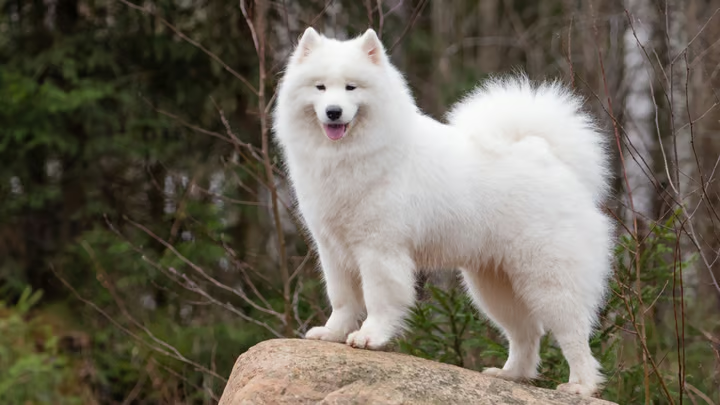
There is no question why people notice Samoyeds. Their thick white coats, dark eyes, upright ears, and famous “Sammy smile” make them instantly recognizable.
But underneath all that fur is a working dog. Samoyeds were developed in Siberia to work alongside people in extremely demanding conditions. Historically, they were used for jobs including herding reindeer, pulling sleds, and helping their human families survive in Arctic environments. That history matters because selective breeding does not disappear simply because a dog moves into a suburban home.
These dogs tend to be intelligent, social, active, and capable of making their own decisions. They often enjoy having something to do. They can also be vocal, energetic, persistent, and creative when they are bored.
Then there is the coat.That spectacular white double coat requires regular maintenance, and shedding can be substantial. Anyone attracted to a Samoyed because of its appearance needs to understand that maintaining that appearance requires work.
In Alaska, the breed may seem particularly appealing. After all, this is a northern working breed built for cold climates. But living in Alaska does not automatically make a household appropriate for a Samoyed.
Climate is only one small part of choosing the right dog.
A Working Dog Still Needs a Job
At Alaska Dog Works, one of the things we regularly teach families is that behavior does not exist in isolation.
A dog that digs up the yard, pulls relentlessly on leash, barks excessively, steals household objects, ignores recall, or destroys things when left alone is not necessarily a “bad dog.” Sometimes we are looking at a dog whose natural drives, intelligence, energy, and environment are badly mismatched.
That becomes especially important with working breeds. You do not necessarily need to hook your Samoyed to a sled team every morning, but you should expect to provide appropriate physical exercise, mental stimulation, structure, training, and meaningful interaction.
Training should begin early and extend well beyond teaching sit, down, and stay.
A young Samoyed needs to learn how to walk politely on leash, come when called around distractions, settle when activity is happening around the house, greet people appropriately, tolerate grooming and handling, and remain comfortable when separated from family members.
Those everyday skills ultimately matter far more than whether your puppy looks good in photographs.
Celebrity Dogs Can Create Real Problems for Breeds
When a particular breed suddenly becomes fashionable, demand can rise much faster than responsible breeders can produce healthy, temperamentally sound puppies.
That creates an opportunity for irresponsible breeding. When buyers are willing to pay thousands of dollars and want a puppy immediately, there will always be people willing to meet that demand without putting the same effort into health testing, temperament, genetics, early socialization, or careful placement.
The Wall Street Journal reports that Samoyed puppies from some breeders can already cost between $4,000 and $7,000. If demand increases significantly, price alone should never be mistaken for evidence that someone is producing quality dogs.
A responsible breeder should be interviewing you almost as carefully as you are interviewing them.
They should want to know where the puppy will live, what experience you have with dogs, what your household looks like, what you expect from the dog, and whether you understand the breed. Good breeders are not simply selling puppies. They are trying to place dogs into homes where those dogs have a reasonable chance of succeeding for the rest of their lives.
Choose the Dog in Front of You, Not the Dog on Instagram
There is a lesson here that extends far beyond Samoyeds and you should not choose a dog because Taylor Swift owns one.
Do not choose a Belgian Malinois because you watched one perform incredible obedience online. Do not buy a Siberian Husky because you love the blue eyes. Do not bring home a Border Collie because you saw one doing tricks on TikTok. And do not choose a livestock guardian breed simply because you like the idea of having a large protective dog.
Choose a dog because its temperament, energy level, working characteristics, grooming requirements, size, and needs fit your actual life.
That requires being honest about the life you have rather than imagining the life you think you will have after buying the puppy.
If your family works long hours, travels frequently, has young children, lives in a small space, has other pets, or simply does not have several hours each week to devote to training, exercise, grooming, and management, those things should influence your breed choice.
There is no shame in deciding that a beautiful breed is not the right breed for you.
In fact, that may be one of the most responsible decisions a future dog owner can make.
Training Starts Before You Bring the Puppy Home
One of the biggest mistakes families make is waiting until a puppy develops problems before contacting a professional trainer.
We would rather talk to you before the puppy arrives.
At Alaska Dog Works, training begins with understanding the dog, the household, and the expectations the family has for life together. If you are considering a Samoyed, Siberian Husky, German Shepherd, Labrador Retriever, mixed breed, or practically any other dog, those conversations can help you determine whether your expectations match the reality of the dog you are considering.
Once the puppy comes home, early training can establish routines for crate training, house training, leash walking, recall, boundaries, grooming, handling, socialization, and calm behavior around the household.
The goal is not simply to create a dog that follows commands.
The goal is to build a dog that understands how to live successfully within your family.
The Taylor Swift Effect Could Be Good for Samoyeds, If People Do Their Homework
There is nothing inherently wrong with a celebrity bringing attention to a dog breed. In fact, increased interest can introduce people to wonderful breeds they might otherwise never discover.
But curiosity should be the beginning of the process, not the end.
If Taylor Swift and Travis Kelce’s fluffy companion causes thousands of people to search for Samoyeds, hopefully those searches go beyond “Samoyed puppies for sale.”
Search for the breed’s history. Learn about its working heritage. Talk with experienced owners. Meet adult Samoyeds. Speak with reputable breeders. Understand grooming requirements. Research health concerns. Consider the cost of responsible ownership. Talk with a professional trainer before bringing the puppy home.
Most importantly, ask yourself whether you want the actual dog or simply the image of the dog.
Because eventually the celebrity photographs disappear from the news cycle.
The puppy grows up an the fluffy little white dog becomes a powerful, intelligent adult with its own instincts, energy, personality, and needs.
And that is when responsible dog ownership really begins.
At Alaska Dog Works, we help families build successful relationships with their dogs through professional training, education, and programs designed around the individual dog and household. Whether you are researching your next puppy or already dealing with training challenges at home, starting with the right plan can make all the difference.
Where to Listen to Dog Works Radio

Dr. Robert Forto
is Alaska Dog Works’ training director.

Michele Forto
is the lead trainer for Alaska Dog Works.
Subscribe to the Dog Works Radio podcast, and check out The Pack newsletter, delivered straight to your inbox.
If you purchase through our links, Alaska Dog Works may earn a commission. Prices were accurate at the time of publication but may change.
We offer a FREE Strategy Call.
Click on the graphic to learn more



Read More

How Alaskan Winters Affect Dog Behavior (+ Training Solutions)