Your Dog Is Talking All the Time. The Question Is Whether You’re Listening.
One of the biggest misconceptions about dogs is that they don’t communicate very well. In reality, dogs are constantly communicating. They simply aren’t using words. Every movement of their ears, every shift in posture, every wag of the tail, every glance across the room, and every change in facial expression tells a story about how they’re feeling in that moment. Long before a dog growls, barks, lunges, or runs away, they’ve usually offered a series of subtle signals that explain exactly what’s happening emotionally. The challenge is that most people never learned how to recognize them.
At Alaska Dog Works, one of the first things we teach clients isn’t how to ask their dog to sit or walk politely on a leash. We teach them how to observe. Training becomes dramatically easier when owners begin seeing the small pieces of communication they’ve been missing all along. A dog that appears stubborn may actually be confused. A dog that seems defiant may be overwhelmed. A dog that suddenly refuses to move may not be ignoring you at all. They may simply be telling you they don’t feel safe.
Learning to recognize those signals changes everything because effective training begins with understanding, not assumption.
Behavior Doesn’t Happen in a Vacuum
One reason people misunderstand dogs is that they tend to focus only on the behavior they can easily see. A dog barks at another dog during a walk, so the owner labels the dog reactive. A puppy jumps on visitors, so they decide the puppy is hyperactive. A rescue dog hides behind the couch when guests arrive, and someone concludes the dog is antisocial.
Those descriptions identify what the dog did, but they don’t explain why the dog did it.
Body language fills in that missing piece.
Every behavior is connected to an emotional state. Excitement, uncertainty, frustration, curiosity, fear, confidence, anticipation, and stress all influence the decisions dogs make throughout the day. If we pay attention only to the outward behavior while ignoring the emotional information that comes before it, we’re trying to solve half of the problem with only half of the information.
Professional trainers spend far more time watching dogs than directing them. Before asking a dog to learn something new, we want to understand what they’re experiencing. That understanding allows us to adjust our approach before the dog becomes overwhelmed or stops learning altogether.
A Wagging Tail Doesn’t Always Mean a Happy Dog
No signal is misunderstood more often than a wagging tail. Most people grow up believing that a wagging tail automatically means a friendly, happy dog. While that can certainly be true, the reality is much more complicated.
A wagging tail simply tells you that the dog is emotionally engaged. The rest of the body explains what that emotion actually is.
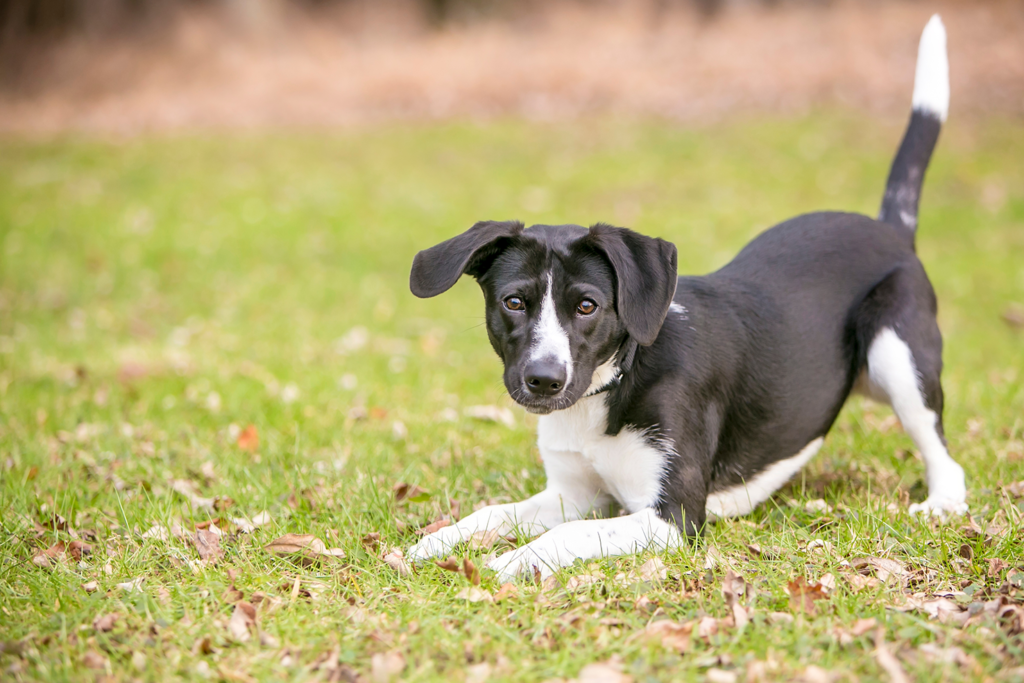
A loose body with relaxed muscles, soft eyes, an open mouth, and a gently wagging tail often indicates a comfortable, confident dog enjoying the moment. On the other hand, a dog standing stiffly with their weight shifted forward, ears focused intently, and a high, fast wag may be experiencing intense excitement or even conflict. Likewise, a low tail wag accompanied by crouching, lowered posture, and hesitant movement can signal uncertainty rather than happiness.
This is why experienced trainers never focus on one body part in isolation. Dogs communicate with their entire body. Every signal works together to create a complete picture of how they’re feeling.
The Small Signals Matter Most
One of the most valuable skills a dog owner can develop is recognizing the quiet signals that appear long before a problem develops. Dogs rarely move from completely relaxed to aggressive without communicating several smaller messages first. Those early signals often include turning their head away, licking their lips when no food is present, yawning despite not being tired, lifting a paw, slowing their movements, or briefly freezing before deciding what to do next.
To an untrained eye, these behaviors seem insignificant. Many owners never notice them because they’re waiting for something obvious like barking or growling. The problem is that by the time those louder behaviors appear, the dog has often been communicating discomfort for quite some time.
Imagine trying to have a conversation with someone who ignores every sentence you say until you’re forced to shout. Eventually, shouting becomes the only way they notice you. Dogs experience something similar. When subtle communication goes unnoticed repeatedly, they often resort to larger, more dramatic behaviors because those are the ones people finally acknowledge.
Learning those early signals allows owners to intervene sooner, reduce stress, and help the dog before the situation becomes more difficult.
Confidence and Fear Can Look Surprisingly Similar
Another reason body language is so important is that two dogs performing the same behavior may be experiencing completely different emotions. Consider a dog pulling toward another dog during a walk. One dog may be eager to greet and play. Another may be frightened and attempting to create distance before the other dog gets closer. From a distance, both dogs appear to be moving forward with energy. Without reading the rest of their body language, it’s easy to misinterpret what’s actually happening.
The same principle applies in many everyday situations. A barking dog isn’t always angry. A quiet dog isn’t always relaxed. A dog that’s lying perfectly still isn’t necessarily calm. Sometimes they’re frozen because they don’t know what else to do. Context matters. Environment matters. Previous experiences matter. Most importantly, the dog’s entire body tells the story far more accurately than any single behavior ever could.
This is one reason experienced trainers avoid making quick judgments. We spend time gathering information before deciding how to respond because successful training depends on understanding the emotion driving the behavior, not simply reacting to the behavior itself.
Your Body Language Matters Too
Communication between dogs and people isn’t one-sided. While owners spend a great deal of time trying to understand their dogs, dogs are equally busy studying us. They notice the way we move, the speed of our approach, changes in our voice, tension in our shoulders, and even the consistency of our daily routines. Long before we give a verbal cue, our dogs have often gathered information from our posture and movement.
Think about how your dog reacts when you pick up your car keys, put on hiking boots, or walk toward the cabinet where treats are stored. They aren’t reading your mind. They’re reading patterns. Those patterns become part of your shared language together.
This awareness becomes especially important during training. Owners sometimes unintentionally communicate conflicting information by saying one thing while their body language suggests something entirely different. A tense posture, hurried movements, or repeated verbal commands often create confusion instead of clarity. Dogs generally respond best when our movements are calm, predictable, and consistent with what we’re asking them to do.
Better Observation Creates Better Training
One of the greatest improvements most owners can make isn’t buying new training equipment or memorizing additional commands. It’s slowing down long enough to observe. Instead of immediately correcting a behavior, ask yourself what your dog may have been communicating in the moments leading up to it. Instead of assuming your dog is refusing to cooperate, consider whether they fully understand what’s being asked or whether something in the environment has captured their attention or created uncertainty.
This shift in perspective changes training from a series of corrections into an ongoing conversation. Rather than trying to control every decision your dog makes, you begin responding to the information they’re already providing. That doesn’t mean allowing inappropriate behavior to continue unchecked. It means understanding why it happened so you can teach a better alternative more effectively.
The best trainers rarely appear to have a special connection with dogs because they possess extraordinary instincts. More often, they’ve simply learned to notice what everyone else overlooks. They see the small changes in posture, movement, breathing, and expression that reveal what the dog is experiencing before the behavior becomes obvious.
Every Dog Has a Voice
One of the greatest gifts of sharing your life with a dog is realizing that communication doesn’t depend on words. Every day your dog tells you when they’re excited, uncertain, curious, relaxed, tired, overwhelmed, or eager to learn. They communicate through movement, posture, expression, and countless subtle signals that become easier to recognize the more time you spend paying attention.
When owners learn to read those signals, frustration often gives way to understanding. Problems become easier to solve because they’re addressed before they become crises. Dogs become more confident because they discover someone is finally listening to what they’ve been saying all along. The relationship grows stronger because communication begins flowing in both directions instead of only one.
At Alaska Dog Works, we believe that successful training begins with understanding the dog standing in front of you. Before you can teach effectively, you have to recognize what your dog is already trying to tell you. Once you begin seeing the world through their body language, you’ll discover that your dog has been communicating with you every single day. You simply needed to learn their language.
If you’d like to better understand your dog’s behavior and build clearer communication, schedule a training evaluation with Alaska Dog Works today. We’ll help you learn to read your dog’s body language, strengthen your relationship, and create the kind of partnership every dog owner hopes to enjoy.
Where to Listen to Dog Works Radio

Dr. Robert Forto
is Alaska Dog Works’ training director.

Michele Forto
is the lead trainer for Alaska Dog Works.
Subscribe to the Dog Works Radio podcast, and check out The Pack newsletter, delivered straight to your inbox.
If you purchase through our links, Alaska Dog Works may earn a commission. Prices were accurate at the time of publication but may change.
We offer a FREE Strategy Call.
Click on the graphic to learn more


Read More