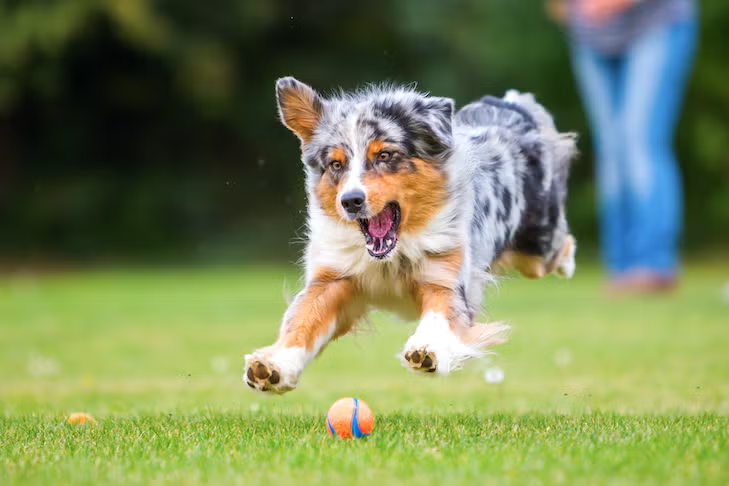
A Tired Dog Isn’t Always a Well-Trained Dog
One of the most common pieces of advice dog owners hear is, “Your dog just needs more exercise.” If your dog is barking, chewing, digging, jumping on guests, pulling on the leash, or refusing to settle in the house, someone will almost certainly suggest a longer walk, another trip to the dog park, or a few more games of fetch. While exercise is certainly an important part of every dog’s life, it’s often presented as the solution to problems that have very little to do with physical activity.
At Alaska Dog Works, we’ve worked with dogs that run several miles every day yet still struggle with impulsive behavior at home. We’ve also worked with dogs that get only moderate exercise yet remain calm, attentive, and enjoyable companions because they’ve learned to make good decisions. The difference isn’t simply how much energy they burn. It’s what they’ve been taught to do with that energy.
Exercise is valuable, but it should never be confused with training.
Physical Exercise and Mental Exercise Are Different Things
Imagine telling a child who struggles to concentrate in school that the solution is simply running laps around the playground. Physical activity is healthy, and it certainly has benefits, but it doesn’t automatically teach reading, math, self-control, or problem-solving.
Dogs are no different.
A long hike, a game of fetch, or a run beside a bicycle can help satisfy your dog’s need for movement, but none of those activities automatically teach them to greet visitors politely, walk on a loose leash, come when called, or settle quietly while guests are visiting your home. Those are learned behaviors that develop through consistent practice and clear communication.
Exercise strengthens the body.
Training develops the mind.
The most successful family dogs need both.
More Exercise Can Create a Better Athlete
Many owners are surprised to discover that increasing exercise doesn’t always produce a calmer dog. In some cases, it simply creates a dog with greater endurance.
Think about a marathon runner. The more they train, the more physically capable they become. The same principle applies to dogs.
If the answer to every burst of energy is a longer walk or another hour of fetch, your dog often adapts by becoming more physically fit. Before long, the amount of exercise that once seemed exhausting barely makes a dent in their energy level.
Without training to develop impulse control and relaxation, owners can unintentionally create an incredibly athletic dog that still doesn’t know how to settle down at home.
This is especially common in working breeds and high-energy sporting dogs.
Behavior Problems Usually Have a Different Cause
Many unwanted behaviors aren’t caused by excess energy at all.
Jumping on guests happens because dogs have learned that jumping gets attention.
Pulling on the leash develops because pulling successfully moves the dog toward interesting sights and smells.
Counter surfing continues because food has occasionally been left within reach.
Barking at the window becomes a habit because people, dogs, or delivery trucks eventually disappear, convincing the dog they successfully chased them away.
None of these behaviors are solved simply by adding another walk to the day’s schedule.
They improve when the dog learns a different way to respond in those situations.
Until that happens, the unwanted behavior continues because, from the dog’s perspective, it’s working.
Dogs Need to Learn How to Relax
One of the most overlooked skills in dog training is teaching a dog that it’s okay to do nothing.
Many owners spend enormous amounts of time trying to tire their dogs out physically, but very little time teaching them how to settle quietly while life happens around them.
This becomes especially noticeable during the holidays.
Guests are talking, and dinner is cooking.
Children are playing games and packages are being opened.
A dog that has never practiced relaxing in the middle of activity often believes they need to be involved in every moment.
Learning to settle on a place bed, remain calmly beside the family, or simply rest while activity continues around them is every bit as important as learning to sit or stay.
Relaxation is a skill. Like every other skill, it improves with practice.
Mental Work Often Tires Dogs More Than Running
Many owners discover something surprising after introducing structured training sessions into their daily routine.
Their dog comes home from a fifteen-minute lesson and falls asleep. That’s because learning requires concentration. Thinking is work.
When dogs practice new behaviors, solve simple problems, search for hidden treats, or focus on communicating with their owners, they’re using their brains in ways that can be just as demanding as physical exercise.
This doesn’t mean physical activity becomes unnecessary. It means mental engagement deserves equal attention.
A balanced routine that includes both physical movement and opportunities to learn often produces a calmer, more satisfied dog than either one alone.
Real Life Requires Self-Control
Consider the situations your dog encounters every day.
Someone rings the doorbell.
A squirrel runs across the yard.
Dinner is placed on the table.
Another dog walks past during your evening walk.
A child drops a piece of food onto the floor.
None of these situations require your dog to run farther or faster.
They require your dog to make good decisions.
Training prepares dogs for those moments by teaching them to pause, think, and respond appropriately rather than react on impulse.
That’s why obedience isn’t really about commands.
It’s about developing habits that carry into everyday life.
Every Dog Needs a Job
Dogs were developed over generations to perform meaningful work.
Some gathered livestock.
Others pulled sleds.
Some hunted alongside people or protected property.
Even today’s family dogs benefit from having purposeful activities that challenge both their bodies and their minds.
Training provides that opportunity.
Learning new skills, solving problems, practicing obedience, and working cooperatively with their owners gives dogs a sense of purpose that endless physical exercise alone often cannot provide.
Many behavior problems begin improving not because the dog became physically exhausted, but because they finally had a productive outlet for their natural desire to learn and work alongside people.
Balance Is the Real Goal
This isn’t an argument against exercise.
Far from it.
Healthy dogs need regular opportunities to run, walk, explore, and play. Those activities support physical health, reduce stress, and strengthen the bond between dogs and their families.
The problem arises when exercise becomes the only solution owners consider.
The happiest, most successful family dogs usually have balanced lives.
They receive appropriate physical activity.
They participate in regular training.
They experience mental enrichment.
They understand household expectations.
They know when it’s time to play and when it’s time to relax.
That combination creates a dog that’s enjoyable to live with year-round, not just after an exhausting afternoon at the park.
How Alaska Dog Works Helps Families Find the Right Balance
At Alaska Dog Works, we believe every dog deserves both physical activity and meaningful education. Our training programs help families build practical skills that fit naturally into everyday life while giving dogs opportunities to think, learn, and succeed. Whether you’re raising a high-energy puppy, improving an adolescent dog’s manners, or helping an older dog develop better habits, we focus on building the kind of behavior that lasts long after the walk is over.
Our goal isn’t simply sending home a tired dog.
It’s helping families enjoy a dog that knows how to behave whether they’re hiking a trail, greeting holiday guests, relaxing around the dinner table, or spending a quiet evening at home.
A walk around the neighborhood is good for your dog’s body.
Training changes the way they live.
Schedule your training evaluation with Alaska Dog Works today and discover how combining exercise with thoughtful training can help your dog become the calm, confident companion you’ve been hoping for.
Where to Listen to Dog Works Radio

Dr. Robert Forto
is Alaska Dog Works’ training director.

Michele Forto
is the lead trainer for Alaska Dog Works.
Subscribe to the Dog Works Radio podcast, and check out The Pack newsletter, delivered straight to your inbox.
If you purchase through our links, Alaska Dog Works may earn a commission. Prices were accurate at the time of publication but may change.
We offer a FREE Strategy Call.
Click on the graphic to learn more



Read More
Not All Heroes Are Nonprofits: Why Paying for a Service Dog Is Worth It