Beyond the Idea of a Service Dog
Many people begin the process of training a service dog with a clear goal in mind. They are looking for support, greater independence, and a partnership that improves daily life. What is often less clear at the beginning is what it actually takes to build that partnership.
Service dog training is not a quick process, and it is not based on isolated sessions or short-term results. It is a structured progression that requires commitment, consistency, and active involvement from the handler. The outcome is not just a trained dog. It is a reliable team that can function effectively in real-world environments.
Understanding that process from the outset is essential. It sets expectations and provides a realistic view of what success requires.
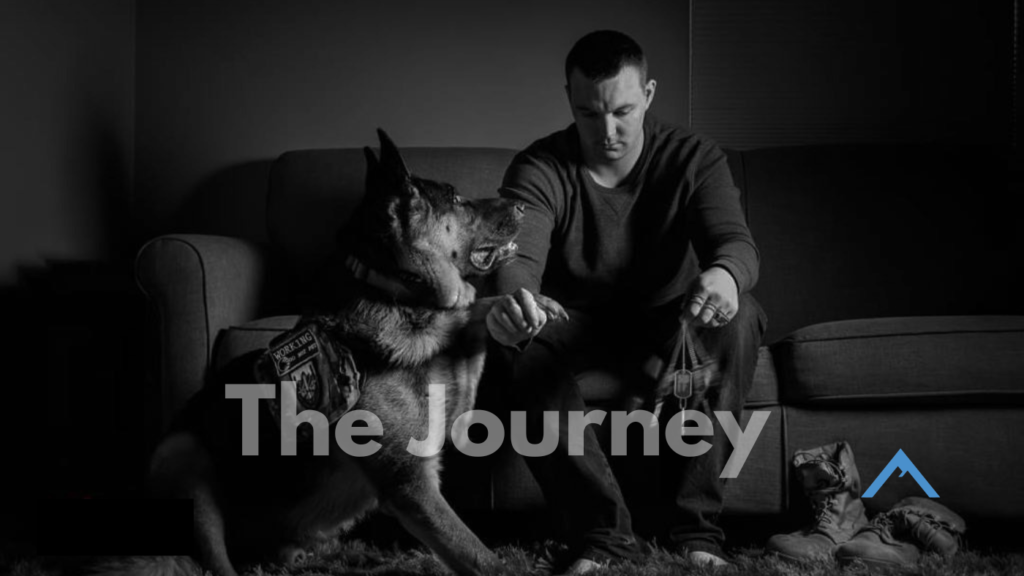
For many years, Alaska Dog Works has worked in partnership with the Elks Lodge to provide service dogs for veterans, partiuclarly with PTSD. We also own and operate a teambuilding and coaching organization called Peak Experience that builds on both dicplines. Recently we completed a podcast series called, The Jounrney that features our work with a service dog client, Danny and his first service dog, Gunner.
Stage One: Interview and Fit Assessment
The process begins with determining whether the program is the right fit. This stage focuses on understanding the client’s needs, lifestyle, and long-term goals. It also evaluates whether the level of commitment required aligns with what the client is prepared to invest.
This is a critical step because not every situation is the same. Service dog training must be tailored to the individual. Establishing clarity at the beginning reduces the likelihood of misalignment later in the process and ensures that both the client and the training team are working toward the same outcome.
Stage Two: Dog Selection or Approval
Once alignment is established, the next step involves selecting a suitable dog or evaluating a current dog for the program. Not every dog is a candidate for service work, and making the right decision at this stage has a direct impact on long-term success.
Factors such as temperament, health, and trainability are considered carefully. This is not simply about choosing a dog that is well-behaved. It is about identifying a dog that can handle the demands of service work in a variety of environments.
The quality of this decision shapes everything that follows.
Stage Three: Foundational Training
With the right dog in place, the focus shifts to building a strong foundation. This stage establishes clear communication, consistent expectations, and reliable responses to basic commands.
The goal is not just obedience. It is creating structure that both the handler and the dog understand and can rely on. This requires repetition and consistency, not only during training sessions but in daily routines.
Most long-term success is built during this phase. When the foundation is strong, the team can progress with confidence. When it is weak, problems tend to surface later under pressure.
What becomes clear during this stage is that success is not driven by the dog alone. It is driven by structure, consistency, and the ability of the handler to apply those elements every day. These are the same factors that determine whether teams perform effectively in any environment. The difference is that in service dog training, the feedback is immediate. The system either works, or it does not.
Stage Four: Advanced Task Training and Team Development
As the team progresses, training becomes more specific to the handler’s needs. This stage focuses on developing the tasks that the dog will perform to provide support, as well as strengthening the working relationship between the handler and the dog.
At this point, the training becomes more complex. The dog must learn to perform tasks reliably, and the handler must learn how to guide and reinforce those behaviors consistently. This is where the partnership begins to take shape.
It is also where commitment becomes more visible. Progress depends on continued effort, practice, and attention to detail.
Stage Five: Public Access Training and Certification
Service dogs must be able to perform in real-world environments. This stage introduces the team to public settings where distractions, variability, and unpredictability are present.
The goal is to ensure that the dog can maintain focus and perform required tasks regardless of the environment. The handler must also be able to manage the dog effectively in these situations.
Certification reflects that the team has met a defined standard. It is not the end of the process, but it is an important milestone that demonstrates readiness for public access.
Stage Six: Recertification and Ongoing Support
Training does not end once certification is achieved. Maintaining performance over time requires continued reinforcement and evaluation. Recertification ensures that standards remain consistent and that the team continues to function effectively.
Ongoing support is a key part of long-term success. Situations change, and new challenges can arise. Having access to guidance and structure allows the team to adapt while maintaining reliability.
This stage reflects the reality that service dog training is not a one-time event. It is an ongoing commitment.
Why This Process Works
This process works because it is built on a system that prioritizes clarity, consistency, and accountability at every stage. Expectations are defined early, reinforced through repetition, and maintained over time through structured support.
These elements are not unique to dog training. They are the same principles that determine whether any team performs reliably in a real-world environment. The difference is that in service dog training, the results are visible every day. The system is constantly being tested, and there is little room for inconsistency.
At Alaska Dog Works, these principles are used to build reliable service dog teams. Through our work with Peak Experience, we apply the same structure to leadership and team development in business environments. The context changes, but the system remains the same.
What This Process Requires
Building a successful service dog team requires more than attending scheduled sessions. It requires daily consistency, attention to detail, and a willingness to follow a structured approach.
Handlers play an active role throughout the process. Their involvement is not optional. It is essential. The relationship between handler and dog is what determines whether the training translates into real-world reliability.
This level of commitment is what allows the program to produce consistent outcomes. It ensures that the dog is not just trained in a controlled setting, but prepared to perform in everyday life.
What This Process Delivers
When the process is followed as designed, the result is a partnership that provides meaningful support. Handlers gain greater independence and confidence in their ability to navigate daily situations. The dog becomes a reliable partner that can perform tasks consistently and respond appropriately in a range of environments.
The value of this outcome extends beyond specific tasks. It creates stability, reduces uncertainty, and improves overall quality of life.
Conclusion
The journey of a service dog team is structured, deliberate, and demanding. Each stage builds on the one before it, creating a system that produces reliable performance over time.
What makes this process effective is not just the training itself, but the structure behind it. The same principles that create successful service dog teams are the ones that drive consistent performance in any high-stakes environment.
For those who are prepared to commit to the process, the result is a partnership that works when it matters most.
Next Steps
If you are considering a service dog and want to understand whether this program is the right fit for you, the next step is to start with a conversation.
Schedule a strategy call to discuss your goals, your situation, and what the process would look like for you.
We offer a FREE Strategy Call.
Click on the graphic to learn more


Read More